








Beyond Big Websites: What Enterprise WordPress Really Demands
Our Founder and CEO, Rahul Bansal, joined Melapress Founder and CEO, Robert Abela, on The Melapress Show, Episode 36. The discussion challenged the liberal use of enterprise-ready, with Rahul explaining that while code quality is a baseline, true readiness is defined by navigating an organization’s invisible forces—long sales cycles, legal reviews, and rigorous compliance checklists. For large organizations, WordPress succeeds when it adapts to these complex stakeholder needs and process-heavy operating models.
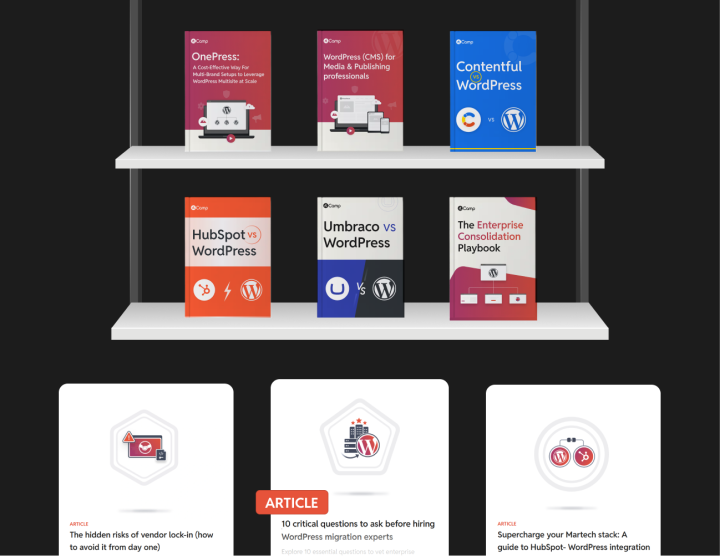
As the conversation turned toward strategy, Rahul advocated for curation over creation. He explained that using a proxy of pre-vetted, premium plugins often outperforms heavy custom development, ensuring faster ROI and long-term stability. This philosophy underpins OnePress, which positions WordPress as a foundational framework that grants enterprises total ownership of their governance and workflows without rebuilding from scratch. Robert and Rahul concluded by discussing rtCamp’s commitment to open-source. By contributing, rtCamp uses community involvement as both a rigorous quality filter for engineering talent and a primary engine for global growth.
Watch the full podcast to understand how enterprises evaluate, adopt, and scale WordPress with confidence.
Watch the podcast here
Beyond Big Websites: What Enterprise WordPress Really Demands
Read the full transcript
Show transcript
Robert Abela
And we’re live. Thank you for joining us for this first episode of 2026. This year we have some interesting guests lined up, so make sure you join us every week or almost every week. Since the last episode, we released an update of WP 2FA, which now supports Passkeys. In fact, if you would like to learn more about Passkeys, join us on 22nd January. We have a session with Tim Nash, WordPress security researcher to discuss Passkeys and explain what they are and how they work.
For today’s episode, we have a very interesting guest, a very interesting story, started as a writer for a local newspaper in 2002, started his computer engineering course and learning English, in 2006 started his first blog and continued building from there. And nowadays, he is the CEO and founder of rtCamp, an agency, a WordPress enterprise agency of 250 people.
Thank you for joining us, Rahul. How are you?
Rahul Bansal
Yeah, I’m good. Thanks for inviting me, Robert.
Robert Abela
You’re welcome. Before we jump in today’s subject about enterprise WordPress, can you tell us a bit more about rtCamp and what you do?
Rahul Bansal
Yeah, so as you mentioned in the introduction, So I started my journey as a blogger. So rtCamp initially started as a kind of a media house, which was hosting our blog network. Like we had different blogs under one umbrella. And from there we’ve pivoted into doing WordPress development, initially small business. I won’t say one small business. Our first audience was literally company of one, like people who are doing their own people who are building their career as a professional blogger and they say, hey, I like this on your site. Can I have it on my site?
Yeah, $10, $20. So those were the initial projects. And then, yeah, from there we kept moving. Then over the time we shut down blogging completely and become this enterprise consulting agency over the years.
Robert Abela
Interesting. This is exactly what I want to ask you about, the enterprise, because you just mentioned the enterprise. I see it a lot. Like people use this term enterprise WordPress. From your experience, apart from the code base, what makes WordPress like a business critical solution, an enterprise business critical solution? What’s the difference between that and non-enterprise WordPress installation?
Rahul Bansal
Yeah. So first, like I agree here, enterprise word is used quite liberally in contest, like anybody who wants to charge premium usually say, Hey, this is an enterprise plan, this is enterprise, this is bad enterprise. Yeah, so it’s like, I think, yeah, it means different thing to different people, but more often, especially in open source communities, which are like usually centered around software, so naturally coding heavy, engineering heavy, we think a lot about only core or mainly core when you think about selling to large businesses like large-scale enterprises, which is not wrong completely, core and like a large part of relationship or winning a deal is revolved around the core, like how can you prove security, scalability or performance, like the history of you delivering something at large scale. But then that is literally half, or I would say less than half part of the real enterprise big projects.
A lot of it is about understanding how enterprises operate. And there are so many variations, like the governments operate differently, listed companies operate differently. Sometimes there are like this house of brands, like this is conglomerates, like which are like span across 20 countries, 30 brands. And there is usually, you need to factor in a lot.
Like the common thing is there is going to be a lot of red taping at every, so you need to have a lot of patience. Like you cannot expect like somebody will submit contact form or you will get a referral and in a one week you will walk away with that deal.
Like that never happened to us also like even after like 16 years or let’s say 10 years in only in exclusive enterprise space. It’s a long journey, involves a lot of stakeholder, a lot of patience, a lot of paperwork, dealing with people who are never going to use the deck, but we’re going to ask a lot of questions.
So, and initially it might sound absurd, like why these people are asking these questions to us, but then it starts making sense because they are also for part of the bigger system.
Like sometimes the question come from the compliance team, sometimes it comes from the legal team. And once you start understanding all the non-engineering forces that operate within enterprise space, you kind of position yourself better for the success, like in this space.
Robert Abela
So is it fair to assume that the biggest difference between enterprise and non-enterprise is more the, are more the things around it, as you said, rather than the actual code base?
Rahul Bansal
Yep. So I would say that, let me put it in two ways. For winning the deal, the non-code part is actually more important because code will only kick in once you start project.
If you don’t get the project, the question will not come to that point. So it’s like first few iterations like the NDAs, like security question, or like sometimes these companies send vendor onboarding forms. =So there are many, many, many steps in the journey where code is not discussed to begin with.
So usually like, so if it comes from referral or like inbound lead, usually they go through a case study. So some kind of assurance they already have about their engineering capabilities.
So usually first question is, have you worked with somebody in our industry? And in our industry, sometimes they’re in compliance, like they want to know, like, have you done. Have you built any website with HIPAA compliant or meet some accessibility standard?
So it’s like it’s very subjective or specific question to them and we need to get it right. Like what are they trying to understand? Are they trying to understand technology, like having moved something from AEM to WordPress or Sitecore to WordPress?
Or are they trying to go through some legal compliance, some kind of government checklist which is applicable in a particular country or in a particular geography or in a particular sector. And the sooner you get it, the more tailored response you give it. So in terms of code, WordPress is open source. There is no limit. You can build anything on it.
So, but that confidence starts from understanding their business. No, not the other way around. Like you cannot just say, we have 50,000 plugin, we can do anything for you. Why not you give WordPress this opportunity? So yeah, so it boils down to understanding the domain business, the invisible forces.
Robert Abela
Interesting. Yeah, we do get effects. We do sell, to some of enterprises. And as you are saying, before you sell, even like I said, sometimes it’s a bit of a big overhead, like even to sell a $99 plugin, you have to first fill in this form to become a vendor with them, and then to approve this vendor, and then they have to send a request for a quote, and there are a lot of…
Rahul Bansal
I get it, yeah, I get it, yeah,
Robert Abela
Which is a bit of an over, but is it kind of like also, is it like, what is these enterprises? Do they know kind of thing? Like, because you said us, you as an agency have to understand the enterprise requirements, but do they understand how purpose business typically work? Because as I said, like sometimes to sell a $149 plugin, it’s like it’s almost an over, no?
Rahul Bansal
Yeah, so how do I put like, so first like…They don’t expect, so somebody sending you that kind of data request is like is not looking for something to buy from $100. Like they expect like this is additional risk. So usually this is a suggestion I give to one of the, like my friend who runs a plugin shop, like create a separate landing page, make it as a enterprise plan and add to bells and whistles like. We will help you on board, we will help you training, we will give you like somebody on the phone support and make it like $5000 or something like that.
It should be in thousands, like at least even if about plugin license and then it’s worth your time and then they can also understand if they don’t want to go through it, like you can ask them, go to the checkout page, $99, put your credit card.
Robert Abela
Yeah, makes sense.
Rahul Bansal
Yeah, it’s like, so how to put like, so usually we, ballpark is like something, we have something called like cost of sale. So before you, as soon as the lead comes, like, so something is like $2,000, we kind of have like a sunk cost. Like this is, even if you don’t win this business, just chasing this would cost us $2,000. Like that’s a rough number that keeps changing based on the like a few factors, but so that’s why I said like this cycle is very time consuming, like that fill the question as they send, you cannot fill in blindly, like sometimes you’re entering into legal obligation, you need to understand what are you signing up for, like, because you cannot say that my plugin is GPL, but yeah, that’s GPL, but this is something signed between two legal entities, so it’s binding on top of GPL.
Robert Abela
Now that you’ve dealt, of course, with a number of enterprises, what’s the biggest misconception enterprises have about WordPress, you think?
Rahul Bansal
The typical security is still being questioned. So depending on who we are talking, like if you’re talking people who are not technical, we refer to the big sites like NASA or White House, and we try to say that, hey, if these folks are using WordPress, you can trust like if White House is in WordPress there is like you can trust it but if somebody from the engineering or tech team ask then we show them data points and then we kind of have that conversation like say WordPress doesn’t get hacked it’s a like it’s like the things you see first is WordPress is very popular so number of incidents will be like there will be something in the news always because this is like half of the web.
But then how often you come across a core vulnerability that was exploited in the wild. Like it’s always some theme or plugin, third party, mostly it’s plugin like the WordPress.org themes I don’t remember get hacked as often as the plugins get.
And then then we kind of explain like what kind of process we have. We usually we tell them maybe don’t have auto update, everything is vetted. And so it’s like it’s easier to how to put like so the misconception is comes from all the kind of people like from the engineering to everybody.
But with usually with engineers it’s easy time because they understand technology. So when we explain slide by slide or point by point like this is how we take care of security. Our customer sites usually like which are hosted on some platform like WordPress VIP won’t get hacked. And then we don’t make it like a blind promise.
We show the processes in place to like deliver on that kind of security guarantees. And then they understand, okay, like there’s so many like from the web application firewall to code review, there’s so many checks and balances in place. So yeah, that is how things will be secured. It’s usually the, yeah. So it’s like usually the people who are not technical, if they have some prejudice against WordPress, they take time to like get convinced.
Robert Abela
Interesting. Yeah. In fact, I want, because I want to ask you that because I’ve always, I also quite often actually, but it’s been a while to be honest, but I encounter people, especially developers, especially the security. In the security industry that they look down on WordPress on the ecosystem. That’s not the first time I speak to someone and say, okay, it’s an industry of hobbyists and script kiddies. It’s not actually. To be honest, last year I spoke to a recruiting agent because we’re looking for someone.
And he actually has been like, what are there people working full time with WordPress? Like, what do you? So people look down on it as a, as a, apart from the showing them technical aspects, is there something like the WordPress People in the representatives you can do kind of like, or is there like some sort of tips that you can give on how we can speak to these people like, hey, this is not just an industry of hobbies and script kiddies. I mean, like there are large scalable solutions, enterprise solutions, etc.
Rahul Bansal
Yeah, so we usually show them showcase like some, for example, like we are in that position that we have already built our portfolio. So usually we are biased. So in our pre-sale cycle, most of the resources we share are linked back to rtCamp, like our own case studies, some kind of white papers where we basically have already addressed those concerns based on the questions received in the past. And now it’s like more like reusing the existing Q&A. It has become like a FAQ for us. They got asked so frequently, now we have answers ready. Compiled in PDF, Google Slides, Google Docs, website, like in multiple format ready for them to consume.
But in general, like I think if you want, like I understand, like if somebody’s listening, this as an agency, you would, you may not want to refer them to resources on other agency sites.
So, and it’s perfectly fine. So I think WordPress VIP is a good place. They have amazing library of resources that you can refer which addresses a lot of different dimensions about different concerns, not just security, scalability, but like productivity, enterprise workflows, how kind of ROIs large companies are driving.
So I think there is more apart from security or scalability, there are other things also like large enterprises look for like, okay, security is okay, scalability is there, but is this software going to solve my problem? And that is the biggest thing happens. Like every enterprise has a different kind of business upload workflow.
There is more, and usually when we think of like writing something in WordPress on a personal blog or something, we think of go to editor, write something, hit the publish button. That is not how it’s happened in like different company. Like in some companies, there might be SEO team who will…we have one point in that like assembly, assembly line kind of production happens like there’s SEO check, there is a graphic designer check who will be like who will be like task for featured image that can be like that can be micro step and there can be legal checks like, hey, can you publish it?
So, can you map those workflows, their internal org structure to the system? And this is very often overlooked, but there are solutions to this where I think I’m not able to recall on my top of my head, but there are case studies if you go to WordPress VIP site and even other resources, you will find those case studies where apart from security and scalability, enterprises have…
has given this confirmation that they’ve benefited in terms of the increased productivity, faster time to market, like breaking the breaking news faster. Those kind of case studies existent not just across media industries, but outside like the mainstream media, like for large conglomerate which has complex org structure, like 10,000 people working in the company and article need to, and a single piece of article need to go through like 6 to 7 different cross-functional teams.
They also have a history of their guest is where they benefited from WordPress simplifying this collaboration, reducing friction, and improving the overall productivity of their team. So, yeah, so.
Robert Abela
It’s so I’m presuming it’s a setup. There’s a lot of customization, right?
Rahul Bansal
Yup
Robert Abela
it’s no longer the standard WordPress code. It’s the WordPress code base, but I’m sure there is much more customization. In fact, there’s this impression that most enterprises prefer to build custom. Is that true?
Rahul Bansal
So, how to put like, they want to, so he is a fine line like, so I would say they prefer their agency partner like us to verify everything that goes on their like site. And as an agency, our goal should be like that. I always keep telling internally that curation over creation. Like agencies usually get tempted to jump to custom codebase because the usually agency billing happens in like hours, like proportionate to the hours. So the more hours you incur, more custom work you do, the bigger the bill you are, the more you are able to charge upfront.
But in longer run, this is not a good approach. That is something we have proved. So we have this list of vetted plugins, like Gravity Forms is our go-to plugin. Any kind of form, we always recommend Gravity Forms. Like Gutenberg is our go-to page builder.
So it’s like we have these pre-vetted solutions, and whenever client has open-ended requirement, we fall back on this. And then if a customization is required, we still look for like…is there anything in public domain? If not, have you built something in as an internal library?
We try to use as much as possible and we take pride in telling client that even though you had this custom budget, we managed to deliver like say something in like half of the budget or like 2/3 of the budget and we saved you X and we take a guarantee of all the codebase like. So that is where the curation over creation comes into picture.
And it’s not like large enterprises are happy that you saved them 20-30% dollar because their overall marketing budget is way bigger than the budget they usually allocate to a CMS, especially a CMS, which doesn’t have licensing fees. So the only thing they’re spending on the consulting partner and bunch of licenses and hosting.
They are happy because you saved them 20% in time. Like you meet the deadline, sometimes you deliver before the deadline, and that is what they’re more happy about. They keep coming back to you. They keep referring you back. And that is where the real growth unlocks. So even though custom is what they can afford and often they think of as an agency, our goal should be to tap into this vast ecosystem we have created like over this 20 years. This library of more than 50,000 plugins, GPL plugins, we have tens of thousands teams. We have reuse as much as possible and yeah, keep like charge more, like charge premium rather than inflating the number of hours.
Robert Abela
So, it’s…
Rahul Bansal
I was saying, we usually tend to avoid custom work even though we are engineering heavy.
Robert Abela
It’s good to know. It’s good to know that, yeah, first you check if there’s something in the public space, if there’s some solution. You have a lot of experience, of course, working with enterprises. When it comes to evaluating a plugin, of course plugin, or any other type of plugin, maybe this is the answer is more for the product vendors.
Rahul Bansal
Yeah
Robert Abela
What’s, now that you have experience working with enterprises, what do you look for in a plugin, in a product to qualify as a suitable product for your projects.
Rahul Bansal
Yeah, so there are many things. The least is we run PHP coding standard like PHPCS to see if there is a known issue, something like that. If there are minor issues, we will fix it. We often send pull request or patch back to the plugin maintainer. Then we usually say like how the plugin is supported. Is it supported or not?, what kind of maintenance it requires. For example, it is some taxation plugin. So taxation is keeps ever changing. So you cannot have a taxation plugin where maintainer think it’s a one time job. They dumped the plugin and disappeared. So you need it to be actively developed. So it’s like usually who is maintainer first like licensing, even though sometimes clients are not strict about it, but we still make sure that whatever we’re putting on their site is GPL or at least any FOSS license so that if tomorrow the original author or maintainer disappears, we can take over and continue to customize it for them.
Then security, as I mentioned, like the PHPCS is a minimum. And then if it’s coming from non-author or like trusted source, then it’s better. So it’s like if something is coming from WordPress.org, it is trusted more. Then you go to the forum, check the rating, reviews, like some past history. But usually, how to put like after working for a decade, for 90% of the cases, we already have something in our internal list. Like we need a form, this plugin, we need this kind of integration, we need SEO. So in almost…all broader categories we already have pre-vetted, pre-approved, like internally plug-in, vetted plug-in.
Robert Abela
Interesting. So is it fair to say that the enterprises, your clients, kind of, I wouldn’t say hold reliable, but kind of like wants to be responsible for the upkeep of the website? Because as you said, they prefer if the plugin is GPL. So in case for some reason that plugin is no longer maintained, then you can take over. Is it safe to say that it’s maybe part of the offering that you offer as well?
Rahul Bansal
So let me put it this way, to them it’s not, so taking over part is more like an internal. For example, let’s say a WordPress 7.0 is coming and a plugin, like say we built a site, let’s say five years ago, that used some API, which happens very rarely in WordPress, like WordPress has amazing track record of backward compatibility. But say in hypothetical case, in each case, Few lines of code need to change to switch from one API to another API, newer version, or maybe WordPress added some capability, like sometime like the GDPR came. It was a new thing, and if your plugin is doing anything with PII, you need to probably modify it to be GDPR compliant, so, but now the original author disappears, like…
And not in a bad way, like it, they might lost interest in the WordPress community, the plugin they might have created was a hobby, some there would be a number of reason, like they are not able to support the plugin, so, it’s an implied expectation that we, as a vendor, will act as a one one point of contact for the entire ecosystem, so when we, so when we are dealing with an enterprise client, we are not representing rtCamp. We represent the entire WordPress ecosystem, like we represent Gravity Forms, we represent Yoast, we represent everybody.
So then we are the single point of proxy for all these entities, theme, plugins, hosting companies, all are like reverse proxied by us. So if it is in a, so usually how it works, like usually in large enterprise project, there is a retainer on maintenance contract, where like this client space, like say lumpsum, like either they buy hourly blocks. In some way, there’s a commercial understanding reach through which there is a budget, there’s a provision for us to keep maintaining whatever we build for them. That includes WordPress core updates, any security exploits that get reported like by the patch tracker and other sources.
And all that being said, even if something needs literally an upgrade, like no security, nothing, just WordPress 7 is coming. Like sometimes things break for PHP update, like something was built like on PHP 8 and now PHP like five years later PHP 9 will come that they have authorised. So there can be any number of reason basically what is blocking the their upgrade or what is blocking their journey. So a standard SOP in agencies like especially enterprises like check with the plugin author report to them whatever support like for if they are totally unresponsive go fix it yourself and if the later responds, send them like, hey, this is a patch we have created.
If you want, you can take it. So if they take it and release it, then we can again hook into the automated update mechanism. Otherwise, we end up maintaining that fork. Usually, we maintain these forks in internal repos. Because these are not security patches. Security patches, we usually collaborate with the author to tell them like.
Robert Abela
So is it fair to say that premium plugins typically are preferred from enterprises than free simply because of course, I mean, it’s never guaranteed, but the fact that there’s a premium, there’s a business behind this support is at least until the business is there is somehow guaranteed. However, if it’s a free plugin, as you said, someone might just back up and leave kind of thing.
Rahul Bansal
I think yes, because how do I put like, so it’s like, I would say enterprises usually don’t differentiate much into that. As I said, like the agency partner becomes the point of contact or representative of the entire ecosystem. We as an agency need to build so many sites.
Robert Abela
Yeah, but for you as an agency, let’s say, since you are representing, for you, what, let’s put it this way. So for you, maybe it’s premium plugin more attractive than a free plugin?
Rahul Bansal
Yes, not always, but usually, so it’s like some, so it need to be supported. For example, there could be a premium model, like some companies release free plugin. So as I mentioned, like if it is updated, backed by a sustainable business, that is more important because otherwise it will eat my agency’s budget. So if the plugin maintainer disappears and we have to make it WordPress 7.0 compatible. I mean, sometimes we get paid in proportion, sometimes we have the fixed budget.
And in fixed budget, this is an additional line item. It’s like it is our margin. So we usually try to partner with this because then the thing is, we get update proactively. So usually like…our release cycle is like if WordPress 7 is coming on the beta RC1, we will start testing our client side on staging. And if something is break, then there’s sometimes like the window is small. Sometimes we, oh, we didn’t know this will break.
But if it is professionally maintained, like the premium plugin, then they have to deliver that update for like the 10s of thousands of customers, like in some cases, millions of customers, something like WooCommerce. So those updates comes much more like in time bound manner without putting stress on our resources. So we usually prefer, as I mentioned, like I mentioned Gravity Forms, right? I mentioned the Yoast SEO. So everywhere we are using premium plugin, there are like free alternatives available. And another thing with agencies is that once they locked into a plugin, they don’t change the plugin in that category.
So it’s like, because then we build processes around it, like our internal documentation, project management, it’s like everywhere, and that is where another reason for us to partner with premium plugins, because then we can take that extra effort to make it part of our day-to-day life, not just the project, but our internal processes, our guidelines, our tooling, everything, even the pre-sales documentation, everywhere that plugin is added. So we kind of bundle it as a core WordPress experience in that sense. So when, let’s say, hypothetically, somebody contact rtCap, they are going to build website for the first time. It’s not going to happen in rtCamp because we usually deal with established companies. And they have, we have no idea how our website looks like, so show us what is the baseline website you can build for us.
So we’ll go, this is a business which thrives on lead generation. So we will put Gravity Forms, and we will not tell this is Gravity Forms. You say, this is WordPress, this is your contact form, this is your lead generation form, this is your SEO. So we, and like when we say SEO, it will be Yoast SEO.
There will be like Jetpack, there will be tons of this plugins seamlessly integrated. And presented as a single offering only when it moves to the next stage as a part of like the transparency in the proposal stage, we will like this feature was followed by this plugin. The licensing cost is this. We as agency already have a license, so that is another good thing in WordPress ecosystem. Most premium plugins offer this agency license where either there is like a huge limit on the sites or unlimited sites and for enterprise. Agencies like the large scale would use enterprise site.
I mean, this is a little bit unfair to the premium plugins, but like 100, 100, 100 site license is a big enough for rtCamp even after 16 years because we build like 10 big 10-20 big sites in a year. So it’s like we are, but like then we put everything in this like so how do I put like we bundle the demo. We bundle it in the proposal, we bundle it in the cost of sale. So everything is seamless for the client. And for this seamlessness to continue over a decade, we need Gravity Forms to be around with us like, let’s say like hypothetically, if tomorrow Gravity Forms shut down the shop.
We will have baseline cost to update our internal documentation, processes. Even if there is no client project, even if the existing client said, we don’t care, like it’s a GPL, it’s on our site. So even if they maintain status quo for the new lead flow that will come in, we will have to do a lot of work.
Robert Abela
Interesting.
Rahul Bansal
Yeah
Robert Abela
So basically, as a product vendor, I’m asking, as a product vendor, it’s if you are in touch or have some relationship with an enterprise agency, it’s important to understand that it’s not just about this, but you need to invest time. It’s a relationship. It’s not something, hey, here’s the license by it. You work together and hopefully have this relationship. So it’s worth for a vendor, even if it’s just 100 site license, to invest the time because they build that relationship right with these type of agencies.
Rahul Bansal
Yeah.
Robert Abela
Is…yeah, go ahead, go ahead.
Rahul Bansal
And like this relationship also, so usually with large enterprises, I get it like. The dollar per site revenue is a little bit unfair because the sites are big. So the plugin pricing is not in proportion to the value of the site that is being used on. But then this agency channel opens up a lot of code integrations. For example, we have built probably a dozen amazing high quality Gravity Forms add-ons over a decade. As an agency, we don’t have any interest in monetizing these small add-ons. So we kind of expand the ecosystem. So it’s like, so it’s a win-win situation in long run because agencies have this budget to build these additional add-ons, which kind of goes back to the ecosystem.
Robert Abela
As an agency, as you said, you sell. A website, a website, it’s a package, not like this package, etc. Do you typically, is white labeling important for you or you just sell everything like with the brands? You kind of like, do you explain to the, even though you’re just selling a website, do you explain to the end user that there are third parties involved, these third party companies, etc?
Rahul Bansal
So in our case, we haven’t sold a single white label site like in our lifetime, like every, I mean, we are, so it’s like, As I mentioned, like we demo it as a single offering, because we don’t want to break the flow, like we don’t want to add the additional cognitive load of thinking the multiple vendor, like you are getting what you want, what you, why does it matter? Like this form is not from the WordPress core, like you are getting the unified experience, both are GPL licensed, so you have the same ownership control, like you have the same rights, legal rights on the form, as well as the Gutenberg Editor.
So, but in, as I mentioned, in the legal doc, we do mention like these are the third-party costs we incur, and we also add one, I would say, like a business side, like we will be allowing renewal on your site as long as you are on our retainer package. For example, you hire rtCamp to build initial site, so let’s say it’s a 10,00-100K project, whatever, six-month project, it finishes. And for some reason, for whatever reason, like it can be like you don’t feel like the site is important enough or like it’s not big enough for you, that you don’t want to go for a retainer project. So if you’re not remaining rtCamp’s client, then we will remove our licenses and we will inform them like, hey, you go and buy Gravity Forms license directly.
You cannot use our agency license sheet and from periodically we go to the all these plugin vendors dashboard because it feels unfair like to the plugin vendors also like why they should pile up because since they’re not with rtCamp tomorrow if something happens on their site they will go and contact direct home directly using our license key so it’s unfair to the plugin vendor to support N number of people under the same commercial license so it’s like you become a retainer 99% of the time. This is the value agencies drive back to the plugin businesses when they act as a proxy between client.
A lot of support requests they have around how this form works, how this integration works are taken care by the agency. I don’t remember. We might have opened like hardly five or ten support requests with Gravity Forms in almost a decade long relationship. So, that is our advantage, but now we periodically clean these licenses, like even if plugin is offering us unlimited site, we go and check, or if it’s part of offboarding process, like if this client is getting offboarded, go and remove their licenses key, or tell them like, hey, we tell them like this was a part of retainer deal since the renewal is not there. And let me tell them, you have to pay $100 to this plugin vendor $50 here, $100 there. And we tell them, you don’t have to buy the agency license for your only three sites, buy three site license, your 12 sites, buy 20 site license. We educate them and we kind of offload them respectfully.
Robert Abela
That’s very fair of you, especially towards the vendors. Considering, yeah, with WordPress, as you said, there are so many, I wouldn’t say complex, but yeah, like you have different vendors and you’re providing the solution. When agents, when enterprises approach you, are they looking for a website or are they looking for a WordPress website?
Rahul Bansal
I would say mix. Some people have made it like a decision at home, like, hey, I’m going to get on WordPress and I just need to figure out which WordPress agency is going to do my project. Those projects have a different cycle. Like the questions are not around WordPress because they’re already sold on the WordPress. Usually these are the clients who come from the hosting companies referral, like the WordPress hosting companies.
So WordPress hosting companies and agencies have a lot of partnerships and a lot of business exchange going on. So usually hosting companies referral are pre-sold on WordPress and they need, they need to just, you need to basically tell why your agency is better than the other agencies they’re considering.
And it’s actually a lot more time subjective. So there is not like clear lines when they’re coming from open-ended ecosystem like say they’re on Drupal or they’re on Sitecore and they want to migrate like they’re on a platform which is like for some reason like they want to move away.
So then they usually evaluate competing often like WordPress, Drupal most often are evaluated like side by side, usually in open source bucket and then there are proprietary CMS. Usually I rarely see somebody switching away from proprietary falling into a trap of another proprietary CMS. They will mostly end up with a WordPress or Drupal. And that is where like then the
So we need to understand what is the old system. And if you have relevant case studies for their old platform, then your chances of winning it is much higher because you can prove them this is how data was stored in your previous system and this is how it looks in WordPress.
And then that actually that battle becomes easier for us to win because then it’s luck based. Like if you have the relevant case studies in your portfolio, you just show them and you suddenly becomes top three agencies competing in the final round.
Robert Abela
So, you don’t see any requests or you don’t see much more requests from people asking you to build a whole proprietary CMS solution? Or do you still see those?
Rahul Bansal
Not much in our way because we have, so it’s like we are branding and positioning is clear that we are the WordPress company. So I would say like we haven’t got any requests. We do get partnership offers from proprietary CMS companies from time to time. Usually when somebody launches new platform, gets huge VC funding, they end up going aggressive on partnerships and they brute force all the agencies like they become our X partner, Y partner, gold partner, blah partner.
But we are very clear, as I mentioned, just imagine if in plugin categories we have our relationships defined like form, SEOs, like commerce, then that happens at that upper level also in CMS, WordPress is locked. Like sometimes client, so we did go two-three times in this entire decade that somebody was evaluating between WordPress and Drupal. And they asked us, like, if you move to Drupal, will you be open to doing that project? We love your agency, your pricing, your culture. We love you, but we are still not sure about WordPress and Drupal, and we told them, no, you.
You, go to Drupal, it’s open source, so, Drupal is the only platform we tell client, okay, to like, okay, to lose, like, if you’re going with Drupal, it’s cool, and if it doesn’t work out, come back, we will move you from Drupal to WordPress, but we are, we cannot touch Drupal, we don’t want to touch Drupal, and it’s not because Drupal is bad or anything, it’s just that our…strength, our expertise, our experience lies in WordPress and the quality we can deliver you for WordPress is something we cannot deliver for Drupal. And the key reason is we don’t use Drupal.
So everything rtCamp sells in its portfolio as a service in main menu is internally used. So we use WordPress. We were using WordPress as a media agency. That’s how we ended up with the WordPress. So long history and that is where client gets benefit. So we, we don’t, proprietary is out of question, but we don’t even build Drupal websites also.
Robert Abela
Yeah, I was just trying to gauge how popular WordPress is, kind of their prices, cost.
Rahul Bansal
Like, yeah, it’s very popular, so I have, let me put it this way, let’s say, because if we win a lead, that’s going to obviously end on WordPress. What about the leads we lose? And among the leads we lose, 80% of them ends up in WordPress with other agencies or in some form or the other. Only a few of them goes to Drupal. And I really, like, I’m not just making up. I don’t remember.
We have seen significantly people moving from one in-house proprietary solution to another proprietary solution. I haven’t seen much people moving from Sitecore to AEM or AEM to Sitecore, like between all these proprietary solutions. Extreme, extreme case they might end up just building the whole like stack in-house, like they might just build end up building the new CMS in-house, which is again a rare, so it’s like WordPress.
Robert Abela
Are there companies who still do it, but their own CMS?
Rahul Bansal
Very rarely, very rarely, very rarely, and they regret it.
Robert Abela
So it’s like, I was going to say…
Rahul Bansal
They regret it like, so usually, so how do I put like, you know, like…it ends up to the bias, like the notion of control. And that is why we launched this campaign called OnePress, where we say that you. So the idea is that you want to build your own CMS, you build it. You just start with WordPress rather than starting with like, say, Laravel or CakePHP or like, say, Django. So don’t think WordPress is a CMS. Think WordPress is a starting codebase. And what you accept from your CMS, ownership. You got it. GPL, 4 freedoms, all yours. Nobody’s going to knock your door and say, stop using WordPress, or I need more money if you want to use WordPress next year.
You want control, whatever you want. So that’s the idea behind that OnePress campaign we created. So we understand that people still have this itch to build their own CMS. So we changed the narrative that we want you to build your own CMS, but rather than starting from scratch, and you’re not going to build in PHP, it’s like 2026. You’re not going to go custom PHP all the way down. You’re going to use some framework. More likely, if you’re building on PHP, it is going to be Laravel. If you’re building in Python, it’s going to be Django. In Node.js, it’s going to be Strapi.
So think of WordPress as a framework, not a CMS, and customize it to your heart, like whatever you want, however you want. And that’s, we call it OnePress, like, and people customize it, right, to the point that if somebody decide to move it or move them away from WordPress, they are looking at similar effort as they would be moving somebody from proprietary platform or custom in-house platform because they customize their workflows, they have their own theming, onboarding.
So to the point that usually conglomerates, when they acquire a new company, they have this complete documentation guideline written like how to bring that new company’s website to…this is their internal stack, even if it is on WordPress, so sometimes they move aside from WordPress to WordPress, like some other page builder to Gutenberg, some other form library to like the Gravity Forms, or like some other like SEO plugin to this SEO plugin, so they have this WordPress to WordPress migration also, because…
They have invested so much in WordPress that they have this, their version of WordPress, like their starting site, their developer environment, their tooling, their CI/CD pipeline, everything is customized at an enterprise level. So it’s like, it’s just built on top of the WordPress, but completely a customized experience. Like sometimes you may not even recognize you’re working in WordPress.
Robert Abela
Interesting. Yeah. Talking about customizations. Do you build more, or do you see more WordPress being used as a what we know as a website at enterprise level, or more as a web application, some backend, some engine, or some?
Rahul Bansal
I think it’s still CMS, but usually there are often some microservices coupled, like depending on like data pipelines. So, for example, we had one customer, they had this like a Groupon website, it used to look like Groupon, like there was a lot of deals and huge website, like a lot of content aggregation. So when they came to us, we noticed that they have like, they’re scraping and processing tons of data from so many APIs and all in the WordPress. So, and it was slowing down a lot. So we moved that part to a separate microservice and then it went all smooth.
So it’s like, so let me put it this way, if people are using WordPress, there is going to be website somewhere. But in many cases, the website will have some part like, there can be a personalization engine which might be talking to a data hub or a data warehouse and pulling some, pulling some like pieces of data chunks as the page getting assembled.
So it’s like a, the end is WordPress, or that would be wrong to say, because in some cases WordPress is behind and the front end is headless, but WordPress, whatever people are storing in WordPress, the expectation is it is going to get displayed somewhere, like either on the internal site or in a mobile app or…on a decouple site, but it’s going to be a it’s it’s a content hub. I won’t say so website is very restrictive. It’s a it’s a it’s an information of content hub for large enterprises and then that content can be exposed across multiple channels.
Robert Abela
Is headless popular, headless WordPress enterprise.
Rahul Bansal
It’s it’s aspirational I would say like many so it’s like how to think. So it’s like utopian, people think like all my problems will be solved by headless. And since it’s prohibitively expensive in most cases, they don’t end up buying for the headless when they, oh, that day we will have headless, all this will be changed. But yeah, so we tried making headless more accessible. It’s like, but it’s a big struggle like. And over the time, Gutenberg evolved so fast that now we feel like.
For if somebody’s going for headless just for the some score web vital or those SEO goals, that’s not worth. That would definitely like don’t approve. Like if you just want headless for the speed or SEO or those benefit or security, all those. So typical headless, like I would say top 10 isn’t to buy headless. Eight of them are no longer valid the way WordPress evolved.
Robert Abela
Interesting. Since we’re talking about enterprise, I usually, as we said, enterprises have a lot of processes in place, a lot of checks and balances and similar stuff. And so going to security now, because we mentioned that as well. Do you see the same, considering they have all these processes and checks and balances, do you see the same problems, security problems in enterprise websites that we see in the small websites usually like user accounts hijacked or outdated software is it are they some problems or they have a different scale or different type of security problems usually?
Rahul Bansal
I would say they have however like some practices which kind of foresee which problems could happen and they have a lot of preventive measures sometimes or them. They put over extra layer of securities, like the WP Admin is locked behind, Cloudflare Zero Trust firewall, then you log in, then the two factors, SSO login. And that is why the way we have it rtCamp level also. So now that’s like, we kind of socialize so much with the enterprise, some of the habits we picked also, like on all rtCamp’s properties, WordPress properties, you can only log in via rtCamp’s Google account.
If, somebody gets fired, or leaves rtCamp, we disable their Google account, and they automatically get removed from all WordPress site, so, usually they have this onboarding, offboarding, user, these APIs are there for employees’ access. Then usually automatic group level permission like roles are also assigned like somebody from marketing team will might get a little role just because they’re in Azure Directory, their Active Directory, they’re part of like this marketing group.
So they centralize a lot of things. So these issues are very rare. I mean, these are rare because these are thought ahead of time like that this and this is where this how do I put like a lot of checklist experience comes into picture like and then there are like sometimes sometimes like there are like absurd rules like around like the password length and all and which I find absurd like I mean some sometimes they are like very strict like 1 customer has like they have the upper limit as well as lower limit.
I can understand like password must be longer than 8 or 12 characters long, but why it need to be less than 20 characters? Something like that. No, it has to be between these two limits. But it’s okay. Like, so I mean, we write customization, we write filters, and then we add those restrictions. But usually, so depending on the client you are dealing, some clients come with like really this kind of checklist. You just have to follow it and it covers most of it out-of-the-box.
And then we as an agency have our baseline practices like disable this, disable that, add this, that, that. So in large enterprise, I would usually say the WP Admin is mostly accessed by their staff, and that is where a lot of security is taken care. They do not have, unless they’re using something like WooCommerce, there is no, the user cannot create account. Like we deal with mostly media clients or large conglomerates which build their marketing sites. So their customers usually end up filling a form. Media customers go watch video or read article at the max, publish a comment. So usually in the WordPress user creation doesn’t happen in most cases.
And in some cases, there are customization that the WP Admin or the WordPress user is reserved for the staff. And if they have CRM or some kind of another system where the user loyalty point or somebody to check, then the website make it look like seamless, but behind the scene, the user login, registration, both are happening over API with some microservice or some other system like CRM or some kind of data.
Robert Abela
So they keep them separate kind of thing, you have the users,
Rahul Bansal
But like in most cases, but like if they’re using WooCommerce and they want people to create account, we do that also. We just, then we have to kind of have like a different login flow, like, oh, this is for employee login, this is for normal WordPress login. There are like additional checks and balances, but usually like, how do I put like any large enterprises won’t allow employees to have a separate WordPress account, which is like, which leaves in isolation.
Like employee identity is tied across organization, like you, like somebody leaves organization, not only WordPress, they will be removed from Slack, Google Workspace, GitHub in multiple places. So that kind of, so as an agency, we need to make sure that the connector we write is bug-free and very well coded and very well tested. Then once in motion that it just works.
Robert Abela
So usually, especially for the team who is accessing the WordPress backend, you see a lot of integration with SSO such as Google and you have one central account and that takes care of everything.
Rahul Bansal
Yeah. And also, in many cases, we have seen, even with SSO integration, not everybody from the company is allowed to log into the site, even as a subscriber. Like, it’s like, for example, like there’s a sales and marketing team example. So marketing team will have access to the WP Admin to update the landing pages, create blogs, and other things. But sales will be restricted to the CRM.
Once an inquiry is captured in WordPress, through some integration, we’ll push it into the CRM, like Gravity Forms Salesforce Connector, or something like that. And then the sales team will only be dealing with Salesforce information. And if you want to capture additional behavior data, like which pages they visited, what kind of articles they have read before, just to give some more context to the sales rep about the visitor journey, then that we are supposed to push into the CRM as a node or whatever that if about, but in no case the CRM team, the sales team will get logged into the WordPress.
So there is like a lot of these layers, like so everything is access is given on need to know basis. Like if you can do your job without accessing WP Admin, why you want to, I need just this three data point or we’ll, we will push it into yours. We will give, we will deliver it to your home, like stay at home, we will send it to your home.
Robert Abela
Yeah, so there’s a reason why enterprises move slow, but at the end of the day, as you said, there are more checks and, yeah, more secure where possible, right? By the side, just curious the question, have you seen any other proprietary platforms, CMS, or that that’s outperform WordPress in specific areas especially enterprise level.
Rahul Bansal
I will be very biased because actually I never use any other CMS in my life. I mean, yeah, the only time we touch other CMS is when we are moving people away from that. So our, we jump to the like, where is the data export screen or where we can, like sometimes we just need to understand like how something worked in the previous system so we can re-architect similar experience or equivalent experience in the new system. So I think I it’s not I’m not I’m not saying see every like there’s so many players in the market. So somebody something they must be also doing right.
Like we cannot say like everybody selling selling proprietary software is just a good sales team that that that make us believe that everybody buying proprietary software is a fool, which is not the case. Like there are people running successful business. So then there is a something we need to evolve iterate. And that’s a good thing, like otherwise that’s how we go from here. Like if you have nothing to do better compared to any other software, then what are we going to work on next? So, yeah, so it’s like I don’t know any specific things. Like I cannot say like AEM does this better or Sitecore does this better or so and so that is better. But yeah, so people do things in different way.
Robert Abela
Yeah, exactly, yeah. Last question, rtCamp contributes 140 hours per week on WordPress through different teams. First of all, that’s very impressive and we, like many other vendors, thank you for it. We do it as well, but smaller scale. Just so people understand the whole WordPress support system, can you explain why contributions make sense for a service company like rtCamp?
Rahul Bansal
So there are many reasons. For example, how to put, like as I mentioned, we had this journey. Like we started as a very small agency and we kept moving up market. So there were multiple forces played. It was not like the full choice. We ended up being enterprise and now we love it. Now we love it. I won’t say we regret it. But then how do to put like so. So there was a time in our journey that like we were dealing with small businesses and we had this amazing engineering talent.
So as we were charging less, we were paying decent salaries, like decent from the, actually we were paying better or way above the average salaries in India, the cost of living in India. But we didn’t know that we are exposed or open to the global competition. So, so we need to match the average in the world or like that. And that’s when that.
So that was there was a window of this tech tool to trigger where a lot of attrition happened because we had these amazing engineers and they were getting paid more than what we were charging our client. And that ended up us forcing us to hire fast. And then we ran out of people who knew WordPress or people who knew any other CMS. So we ended up going to colleges like the academic institutes and hired people. So 90% people in rtCamp, for them, this is their first job.
So for more than 90% people. So these people came from the colleges, we taught them WordPress, but we also needed external validation, like these are good engineers before we vouch them in front of the client. So we thought like, we don’t have any more budget left. We already trained them. We are short on money. Why don’t we put them in WordPress Core? They submit some patches and we see like how the core committers or the like give the feedback on their patches.
And that initially started as like a stopgap arrangement or like necessity because we take pride a lot in our quality. Like we didn’t want to put somebody on the client project later to…client complaining, hey, that might be good, but this is not like a good fit for us. Like, oh, your engineer doesn’t know how to deal with security or how to send pull requests, blah, blah, blah. So even after training, we had this mandatory period, like you go to the WordPress Core, make some contribution and come back. And then later on, as we started going enterprise, sales team noticed this, that our core contributions are actually giving us some brownie point in client’s evaluation process.
So as I mentioned, like, so there is a tendency of people to think like big companies are run by fools. No, they are some of the smartest people. They move slow because of the, there’s like so many things. Like as rtCamp is growing, we are also slowing down. Like we felt some slowdown. And those people are some of the smartest people who work at these large companies and they can like they know the difference. Like somebody making tall promises, we are the number one company according to that survey and that like paid review article list us among the top two places to work. They cut this crap, go through, see through it. Oh, your people are contributing to WordPress Core. Can I see their patches? These are the Trac tickets, nice. We will give you a shot.
And we literally got that feedback from the initial, so it’s like then we found this whole system like hire from the colleges, train them, and now we have something like six months you have to spend in WordPress Core contributing, and actually we have been doing it from for a long time, like it’s like it recently started getting highlighted. We have been, I mean, I think WordPress started the…the WordPress Make team writing that article of month in a WordPress where they kind of some of the contribution by company.
That’s how we kind of started getting highlighted. But we have been doing this long and now we are in a bigger size. So earlier we were doing like one person doing 20, 30, 40, 50 hours. Now we have like 6 people spending 160 hours per month plus 10 people spending 160 hours per month for six months. So that’s like a lot of hours, almost like 10,000 hours every year we are putting into WordPress. So it is, so the size of number is getting that attention, but I still believe like that is one of the best hack and we replicated.
Somebody asked me a question about Frappe, which is another open source community in which rtCamp is entering. Same playbook we are running there. Like we went there, we contributed so much to the community with just one or two landing pages on our site. We are getting so many leads. So contributing to open source is the best growth marketing, I would say. I learned it by accident. But now after repeating it twice, I can confidently say that go contribute to the open source community that you want to be part of, you want to represent. And you will be surprised how fast you climb up.
Robert Abela
I was going to say it’s a win-win situation because you are contributing. But yeah, as you said, you’re with customers through it, but also your team is learning at the same time.
Rahul Bansal
Yeah
Robert Abela
So it’s like, it’s a win-win.
Rahul Bansal
Yeah.
Robert Abela
Thank you very much, Rahul. Thank you for your time. Is there anything else we missed or you’d like to mention before we end the session?
Rahul Bansal
Thank you. Yeah, thanks for having me.
Robert Abela
Thanks. Where can people reach you or reach rtCamp?
Rahul Bansal
rtCamp is the like website, social media. We rtCamp both are available across like all the platforms, like X, LinkedIn, Instagram, Facebook also, GitHub. Yeah, so rtCamp is a lot of, if you’re an engineer, like you can interact with our codebase on GitHub. It depends, like, yeah, but yeah, rtCamp website is always there.
Robert Abela
Yeah. I’ve seen some of your posts as well. You’re not very active on LinkedIn because of course of the lot of stuff.
Rahul Bansal
Yeah
Robert Abela
So ideally a lot, yeah, good. Thanks a lot, Rahul. Thanks for your time. And we’ll see everyone next week. Thanks everyone for joining. We’ll see you next week.
Rahul Bansal
Thank you for having me Robert.
On this page

Leave a Reply