








How to Hire Expert WordPress Developers: A Practical Guide for Enterprises
All the benefits you choose WordPress for (lower total cost of ownership, faster time-to-market, and digital agility) only materialize through high-quality WordPress engineering. In other words, WordPress’s enterprise value depends entirely on the technical maturity and foresight your WordPress team brings.
Big Tech, Fortune 500s, and some of the world’s largest organizations hire WordPress experts from us. And across projects of every scale, we see the same themes emerge: enterprises ask similar questions, weigh familiar considerations, and face the same challenges when building/scaling their WordPress teams.
In today’s article, we unpack how you can hire WordPress experts who can help you evolve, scale, and fully realize WordPress as an enterprise platform, covering everything from finding to assessing and selecting.
What we’ll cover:
- In-house vs. Outsourcing vs. Hybrid Models: How enterprises structure WordPress capability for long-term success.
- Your Hiring Options Compared: Enterprise partners, agencies, and freelance platforms — who fits where, and why.
- Where to Find Certified WordPress Developers: Trusted sources for enterprise-grade WordPress talent.
- Assessment Framework: Evaluating for capability, compatibility, and continuity.
- Selection Criteria: Aligning for scalability and sustainability — and moving from evaluation to confident partnership.
Hiring WordPress Development Experts: In-house vs Outsourcing vs a Hybrid Model
At the enterprise scale, the most important consideration around WordPress engineering isn’t who writes the code: it’s where ownership, leadership, and continuity should live within your organization.
In-house
In the in-house model, you build and run your own WordPress engineering function: you maintain a team of WordPress development experts in-house that manages everything end to end, from platform architecture and CI/CD pipelines to performance, accessibility, and security compliance.
Here, your internal WordPress team drives continuous platform evolution in close collaboration with business, design, and IT stakeholders. You own complete control across every layer — infrastructure, delivery, and direction.
From what we’ve seen at rtCamp, enterprises that typically take the in-house route are those where WordPress itself is a product, the digital infrastructure of the business, continuously developed, maintained, and evolved by internal teams, much like any other product or service line.
An example: A global media house running a centralized WordPress platform powering multiple brands. You can see how WordPress, in such organizations, works as a product in its own right — with everything from its infrastructure to architecture and ongoing story (content) formats needing dedicated engineering.
That said, even with a strong in-house team, there’s almost always a need for staff augmentation, especially when specialised skills or bandwidth are required. In fact, in our experience, most “in-house” setups still rely on external capability support to move faster and go deeper. For instance, when Al Jazeera wanted to explore headless capabilities, they partnered with us to support their initiative.
This model also means taking full responsibility for sustaining the operation: hiring and retaining talent, maintaining processes, and ensuring ongoing technical leadership to keep the platform evolving reliably at scale.
Outsourcing
In the outsourcing model, you engage external WordPress experts to bring in niche expertise so you can execute defined initiatives without building/expanding internal teams. In this model, you outsource your execution layer to WordPress experts for hire — through independent contractors, agencies, or enterprise staff augmentation partners — who deliver against defined outcomes and SLAs, while you retain strategic direction internally.
Here, WordPress becomes a “project,” a defined outcome delivered by external specialists within clear timelines and scopes. Think high-impact initiatives such as:
- Platform migrations: Replatforming from legacy or proprietary CMSs
- Strategic CMS work: Upgrading to Gutenberg or switching from Elementor to Gutenberg, embracing FSE
- Upgrades. Core, plugin, and infrastructure updates at scale
- Performance optimization: Improving site speed, scalability, and Core Web Vitals.
- Ad hoc builds for marketing campaigns: Landing pages, microsites, and promotional experiences.
- Custom integrations: Connecting WordPress with analytics, martech, and other enterprise systems.
- Feature or theme development: Extending WordPress with custom features, design systems, and digital experiences.
- Ongoing maintenance: Proactive monitoring, updates, and support handled entirely externally.
Hybrid
Most mature enterprises eventually arrive at a hybrid model, where ownership stays internal and engineering scalability comes through strategic partners like rtCamp.
It’s not outsourcing, it’s capability extension, built on shared context, standards, and accountability.
A key feature of the hybrid model is strategic staff augmentation where you hire remote WordPress developers long-term to work with your internal teams to extend capacity, accelerate delivery, and preserve overall alignment.
Here, WordPress becomes a platform, a continuously evolving ecosystem co-owned between your internal teams and your partner organization. Your teams focus on product direction and business alignment; your partner brings technical excellence, reliability, and velocity.
An example: A multibrand enterprise consolidating its digital presence migrating multiple sites, sub-brands, and regional properties into a unified WordPress ecosystem, streamlining governance, improving scalability, and lowering maintenance overhead.
Another form these projects take is when software platforms want to build integrations or bridges in their core product with the WordPress ecosystem. For example, when Salesforce wanted to develop a native integration with WordPress VIP, they partnered with rtCamp to deliver it. Or when Google wanted to bring Instagram-like Web Stories to WordPress, they engaged rtCamp to build and maintain the open-source plugin that powers it.
In both cases, the projects were self-contained but strategically critical, proving how outsourcing even core product development could benefit from specialized external expertise.
This hybrid model combines the best of both worlds: internal ownership and external elasticity, giving enterprises the ability to move fast without losing control.
Your Hiring Options Compared: Enterprise Partners (like rtCamp) vs Agencies vs Freelancing Platforms/Freelancers
Once you’ve decided how to structure your WordPress capability (whether in-house, outsourced, or hybrid), the next question is where to source that expertise.
Essentially, you’re choosing among:
- Enterprise WordPress partners (like rtCamp),
- Typical WordPress agencies, or
- Freelance WordPress developers.
Typically, you’ll source talent based on the scope and strategic importance of the work.
Enterprise WordPress partners: Your platform engineering allies
Enterprise partners step in when WordPress isn’t just a CMS but a digital infrastructure powering your enterprise. In these engagements, WordPress is treated as a product, continuously engineered and optimized. Typical examples of partner-led work include:
- Architecting and maintaining enterprise multisite networks for global ecosystems.
- Migrating from legacy or proprietary CMS platforms (e.g., Sitecore, AEM, or Drupal) to WordPress at scale.
- Leading digital consolidation initiatives, unifying fragmented brand or regional sites into a governed, scalable WordPress ecosystem.
- Building custom integrations between WordPress, Salesforce, Adobe Analytics, and other martech stacks.
- Developing and maintaining headless or decoupled architectures at enterprise scale.
- Conducting performance, accessibility, and security audits for high-traffic, compliance-sensitive platforms.
- Providing staff-augmented engineering teams to extend internal capacity and maintain delivery velocity.
Typical WordPress agencies: Your project delivery teams
Most WordPress agencies are built around project-based delivery, and many excel at creative builds, redesigns, and marketing-driven experiences. That said, the primary difference between an agency and an enterprise partner is scale: The scale of the project, scale of architectural complexity, scale of organisational impact, scale of integration depth, and scale of long-term accountability. Typical examples of agency-led work include:
- Implementing basic SaaS or analytics integrations (plug-and-play or low-config).
- Executing lightweight migrations or rebuilds.
- Enhancing existing sites with UI/UX improvements or minor feature additions.
- Providing short-term, fixed-scope delivery support (e.g., campaign needs).
- Designing and developing marketing or campaign websites with clear brand and conversion goals.
- Performing incremental performance, accessibility, or SEO tune-ups focused on specific pages or journeys (not full-scale optimization programs).
Freelance WordPress developers: Your task-based specialists
Freelancers fit best into small, self-contained tasks: deliverables that may support specific areas of enterprise operations but don’t require deep architectural knowledge or access to core systems.
In enterprise settings, freelance contributions are often sandboxed: designed to extend functionality, streamline workflows, or resolve minor technical issues.
Their work is later reviewed, hardened, and merged by the internal engineering teams. Typical examples of work when you hire expert WordPress developers as freelancers include:
- Implementing straightforward form integrations (e.g., connecting Gravity Forms to HubSpot or Salesforce).
- Building minor features.
- Assisting with page or template builds.
- Resolving plugin-level conflicts or dependency issues in non-production/ staging environments (not full plugin audits or long-term maintenance).
- Refactoring individual features or components for cleaner, more performant code (not full-stack or system-wide refactoring).
- Implementing basic, single-source tracking or analytics instrumentation (not multi-platform or governance-driven data strategy).
- Preparing FSE or Gutenberg-compatible templates based on existing designs (not full design systems or editor-wide component libraries).
As you can see, when you hire WordPress experts on a freelance basis, they help you stay agile. You can get quick, low-risk work that doesn’t warrant engaging full internal or partner engineering capacity.
In short, partners deliver platforms, agencies deliver projects, and freelancers deliver tasks, each playing a distinct role in scaling your WordPress capability.
Where To Find Certified WordPress Developers for Your Enterprise?
Once you know what kind of expertise you need, whether a full partner, an agency, or an individual contractor, the next step is tapping the right sources. Here’s where enterprises typically find WordPress expertise, and key features of each.
rtCamp: On-Demand Enterprise WordPress Expertise
rtCamp is a globally recognised enterprise WordPress agency and a WordPress VIP Gold Partner, operating at the intersection of engineering excellence + enterprise delivery maturity.
In addition to full-fledged platform services, we also provide staff augmentation at scale for enterprises that need on-demand engineering capacity for high-stakes WordPress initiatives, something only a handful of enterprise agencies actually offer.
What makes rtCamp different
When you work with an enterprise WordPress partner like rtCamp, you don’t just hire WordPress developers, you gain access to engineers who help build WordPress. Here’s what makes our engineers different:
- WordPress VIP certified: Trained and tested against Automattic’s highest technical standards. If you’re looking to hire WordPress VIP experts, we have them.
- Battle-tested through real enterprise work: Every engineer works on live client projects before qualifying for staff augmentation or dedicated engagements.
- End-to-end engineering discipline: From architecture to automation and CI/CD.
- Core contribution: Active core contributors with experience across open-source, internal R&D, and client delivery.
- Rigorous internal learning and development process: Every rtCamper is vetted, trained, mentored, and reviewed across multiple feedback cycles before deployment.
- Hiring and training: We recruit from thousands of applicants, and just 1% of the candidates pass our technical interview benchmark, which focuses on core computer science fundamentals. Once onboard, every engineer enters our in-house L&D program that includes structured training, practical assignments, mandatory open-source contribution (part of our culture), project shadowing, and gradual transition into hands-on client delivery.
Also, our approach goes beyond interview-based vetting (as seen with platforms like Codeable). Because our engineers aren’t just assessed, they’re proven through collaboration, contribution, and production-grade delivery across industries.
If you’re looking to hire certified WordPress developers who combine hands-on experience with enterprise-grade engineering discipline, partners like us can help.
Once you’ve shortlisted potential partners, you can further verify credibility through independent platforms like Clutch, where verified client reviews and case studies provide transparency into delivery reliability and technical competence.
⚙️ Best for: large-scale WordPress platforms where engineering depth, scalability, and reliability are essential to business continuity.
General WordPress agencies
For smaller or project-specific needs, WordPress development agencies can be a practical middle ground. These firms typically handle site design, development, and maintenance, often through project-based or retainer engagements.
You’ll find agencies through:
- Clutch and GoodFirms, for reviews, industry focus, and verified case studies.
- Industry events and WordCamps, where agencies often participate.
- Professional networks or tech community referrals, still one of the most reliable ways to find agencies aligned with your standards.
⚙️ Best for: mid-sized digital teams needing structured delivery for specific projects, redesigns, or campaigns, without requiring continuous engagement, backend engineering maturity, or enterprise-grade SLAs.
Freelance talent platforms
When you need individual expertise or short-term help, freelance platforms can provide quick access to WordPress development experts across regions and price points. However, they work best when scope is limited and governance overhead is manageable.
Common sources include:
- Codeable: A curated platform specializing in pre-vetted WordPress development experts. You’re looking at an $80–$120 hourly rate here, plus the platform’s 17.5% service fee.
- Toptal: A platform known for its rigorous vetting process (claiming the top 3% of WordPress freelancers) with a more mature project catalog than Codeable.
- Upwork: A large marketplace offering flexible hourly or contract-based engagements at varying skill levels.
- Stack Overflow. Could be used for technically driven hires. You need to manually “X-ray search” public Stack Overflow profiles to hire expert WordPress coders with specific, niche expertise here. Alternatively, use their employer branding solution. It doesn’t support active hiring anymore.
⚙️ Best for: tactical or experimental work, like plugin improvements, campaign landing pages, or performance troubleshooting, where speed matters more than process maturity. WordPress developer hourly rates can vary greatly across platforms.
In all, the right source depends on scope, duration, and criticality. And you might hire a mix of talent.
For example: You might engage a WordPress agency for your frontend design and creative execution, rtCamp for backend engineering, integration, and platform reliability, and a freelancer for campaign-specific landing pages.
This layered model lets you hire dedicated WordPress developers that give you creative agility on the frontend, engineering depth at the core, and flexibility at the edges, aligning the strengths of each to your business priorities.
Fast-Track Your WordPress Hiring for Speed, Quality, and Certainty with rtCamp
Now that you’ve defined your WordPress engineering requirements, it’s time to hire. Traditional hiring cycles can take months, introduce uncertainty, and still result in misalignment. With rtCamp, you can accelerate your hiring timeline without compromising engineering depth, delivery readiness, or technical fit.
Our on-demand WordPress engineers are enterprise-trained, production-tested, and ready to integrate into your workflows from day one, giving you the speed of scaling with the confidence of proven capability.
How fast-track hiring works with rtCamp:
- Share your requirements. Tell us what you need, and we’ll review your requirements and identify suitable engineers.
- Get matched within days. We shortlist the right engineers within a week (often much sooner in just 48 hours), based on relevant skill, experience, and project context.
- Interview for final fit. You interview the shortlisted candidates, evaluate technical compatibility, and select who joins your team.
Try before you commit — a risk-free two-week trial
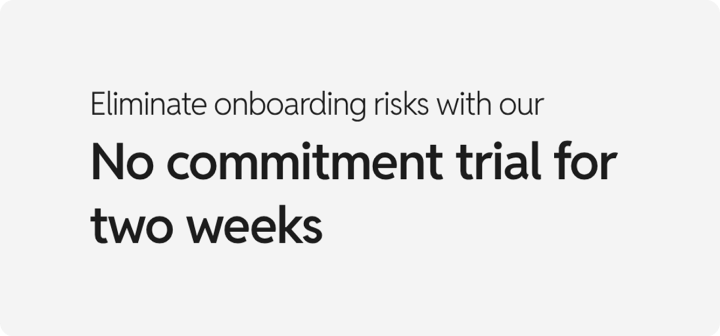
To make hiring low-risk and high-confidence, we offer a two-week, no-commitment trial period for new engineering engagements. During this time, our WordPress engineers work directly with your team, stack, and processes, giving you a real evaluation of fit, capability, collaboration, and delivery style, not just interview impressions.
You only pay if you choose to continue after the trial.
If not, there’s no invoice and no obligation. We can either re-match talent or you may explore other options, friction-free.
This evaluation model is only possible because of our talent scale, engineering maturity, and delivery confidence. This is something that most sourcing vendors, freelancers, or project-only agencies can’t and won’t offer.
Conclusion: Build capability, not just capacity
When you hire WordPress experts at the enterprise scale, the goal isn’t simply to add developers, it’s to strengthen your long-term ability to evolve WordPress as your digital platform. The right talent should raise engineering standards, accelerate delivery without compromising quality, and create forward momentum that compounds over time.
At rtCamp, we’ve helped some of the world’s largest organisations do exactly that. Our engineers don’t just work with WordPress — they help build WordPress — bringing a blend of enterprise delivery maturity and open-source excellence to every engagement.
If you’re exploring how to scale your WordPress capability, we’d be glad to discuss your resourcing needs, initiative goals, and the best engagement model to help you move forward with confidence. Let’s discuss your WordPress resourcing needs.
Frequently Asked Questions (FAQs)
Where can I find certified WordPress developers for enterprise work?
Start with WordPress enterprise partners, which lists vetted enterprise partners. You can also explore Clutch, Codeable, Toptal, and Upwork — but for regulated or large-scale environments, certified WordPress partners offer the highest engineering consistency and compliance readiness.
Can I hire a dedicated WordPress developer for ongoing work?
Yes. Dedicated models are common in enterprises that need steady engineering velocity without expanding internal headcount. You can hire a dedicated WordPress developer or an entire embedded team through a partner — ideal for maintenance, feature delivery, migrations, modernization, and continuous improvement. This approach blends internal control with external scalability.
How much does it cost to hire a WordPress developer?
Rates vary widely by region, experience, and engagement model:
- Freelancers: broad range, task-based rates
- Agencies: project-based pricing
- Enterprise partners: long-term or capability-based engagement models
For enterprises, pricing is typically linked to engineering maturity, SLAs, and continuity rather than just hourly rates.
How do I find the right WordPress developer for my project?
Start by clarifying your project’s scope and complexity. For small, task-based needs, freelance platforms work well. For full-site builds or creative work, WordPress agencies are a better fit. For enterprise-scale engineering, migrations, integrations, or long-term capability building, work with an enterprise WordPress partner where you can hire certified WordPress developers experienced with governance, scale, and system-level delivery.
Focus on experience, architectural thinking, communication, and quality standards, not just price.
How long does it take to onboard a dedicated WordPress developer?
Onboarding timelines depend on internal processes, access controls, and the maturity of your partner. At enterprise WordPress agencies like rtCamp, onboarding typically takes one week, including environment access, security checks, tooling setup, documentation review, and alignment on workflows. Embedded developers usually begin contributing meaningfully in the first sprint.
On this page


Leave a Reply