







The most expensive website is the one you finish developing.
You know how the conversation goes. Someone brings up the website, and the room gets quiet. Marketing needs changes but doesn’t want to ask engineering. A homepage change requested six months ago is still unresolved.
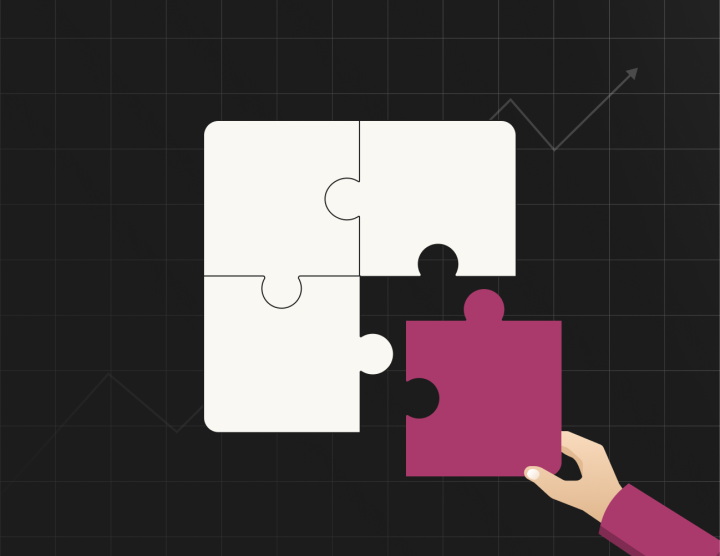
The product mindset is different because you invest continuously, measure what matters, and improve what isn’t working. A platform that evolves beats a replacement cycle that resets everything you learned.
Our client partners at Cox Automotive keep shipping new capabilities on WordPress years into the engagement. Instead of rebuilding every three years, they’re iterating every sprint.
The rest of this piece goes into the details.
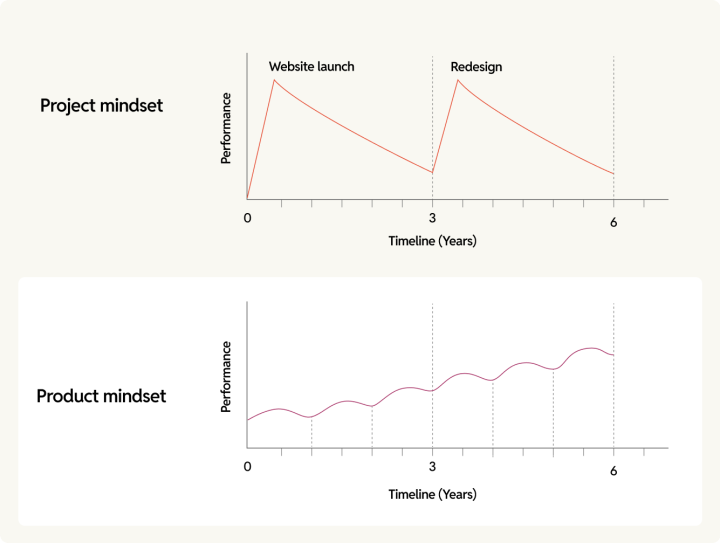
Product teams build equity, project teams depreciate
TIME.com runs WordPress VIP with 100+ staff on the Gutenberg Editor, custom blocks, and reusable patterns. They handled 100k+ requests per second during peak traffic. Disney, Meta, and Salesforce also run WordPress at scale. None of them treats their website like something they bought. They treat it like a thing they’re building.
The proof shows up in multi-year engagements. Cox Automotive’s relationship started with brand migrations (Dealertrack from AEM, Manheim from AEM, FleetNet from Drupal), expanded to platform unification across 8 brand websites, and now includes AI implementation with Salesforce Agentforce. The outcomes have been stellar:
- 103% engagement increase
- 100% more lead conversions
- Brand commonality increased from 2% to 50%
- 7 large websites launched within 12 months with 70-80% code reuse.

Product teams close the loop between shipping and learning. They instrument everything, watch how people use it, and let that drive what gets built next.
Grist’s Parse.ly integration is a good example: “Parse.ly helps us increase reader engagement and improve our conversion funnels. We are able to know how long readers spend on our articles, and what was the last article read that led to a conversion.”
WordPress plugs into a wide range of analytics and optimization tools: Hotjar or Microsoft Clarity for heatmaps and session recordings, Google Analytics (GA4) for traffic analysis, Parse.ly for content performance, and VWO or Optimizely for A/B testing.
TCO math that favors continuous investment
A $500K website that needs replacing in three years costs $167K annually in depreciation. A $300K platform with $75K annual investment that never needs replacing changes the math entirely.
Here’s why traditional enterprise CMS platforms make iteration feel impossible. Adobe Experience Manager licenses run $80K to $200K annually before you write a line of code. Implementation adds another $200K to $600K. You end up optimizing costs for not breaking things instead of making things better.
WordPress flips this with zero licensing costs. Every dollar goes toward building what you need. Forrester’s Total Economic Impact study found WordPress VIP deployments achieve 415% ROI with 40% efficiency gains.
| Cost dimension | WordPress | AEM | Sitecore |
| Initial build/migration | $50K-$200K | $200K-$600K | $200K-$500K |
| Annual platform license | $0 | $80K-$200K | $60K-$150K |
| Annual hosting/infra | $15K-$60K | $40K-$120K | $40K-$120K |
| Annual maintenance & upgrades | $20K-$60K | $80K-$200K | $70K-$180K |
| Typical 5-year TCO | $250K-$650K | $900K-$1.8M | $700K-$1.5M |
| Vendor lock-in | Low | High | High |
Disclaimer: All cost figures cited in this article are industry-wide indicative ranges sourced from third-party research and do not represent rtCamp’s pricing. rtCamp’s rates are determined on a per-project basis and may vary depending on scope, complexity, and engagement model.
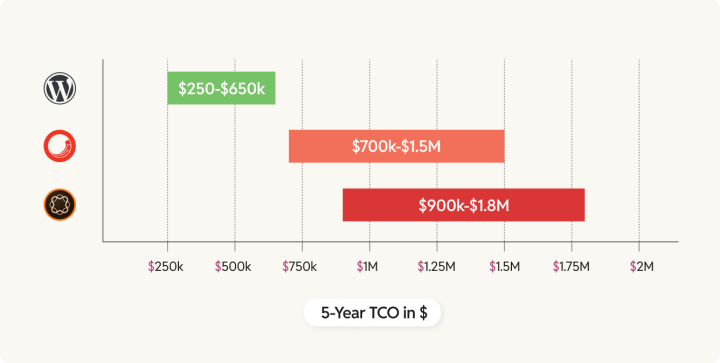
The savings come from what you don’t have to rebuild. Dealertrack’s AEM migration cut time-to-publish by 50%. The platform that previously required “developer intervention for nearly every little change” now lets marketing ship content the same day. If a lead form underperforms, the next sprint fixes it. Small conversion improvements compound into real revenue. If you need more engineering capacity without the overhead of full-time hires, staff augmentation gets you there.
Still worried WordPress can’t handle enterprise requirements? The White House and NASA already settled that. WordPress VIP holds FedRAMP Moderate authorization, SOC 2 Type II, and ISO 27001 certification.
WordPress for enterprise: Custom Post Types, blocks, and headless architecture
Enterprise WordPress is an application framework that also includes a world-class editorial interface. Custom WordPress development will help you discover what that means for complex business requirements.
Custom Post Types and taxonomies: Model any content structure
Custom Post Types and taxonomies model any data structure. Real estate platforms, restaurant chains, automotive dealer networks, publishing empires. WordPress handles complex relational data through CPTs exposed via REST API or WPGraphQL. If you can model it in a database, you can model it in WordPress.
The block editor: Content creation without developer bottlenecks
The block editor moves content creation from code-dependent to design-system-enabled. News UK saw a 60% productivity gain largely because editors stopped waiting for developers. Blocks enforce brand consistency while letting creative teams create faster.
Headless WordPress: Powerful, but only when you need it
Headless architectures get a lot of attention, but be honest about when you need them. You pay for separate frontend hosting, build custom API layers, and hire developers fluent in both WordPress backend and your chosen JavaScript framework.
The rtCamp headless philosophy explains why these projects often underperform expectations. Reserve headless for multi-channel requirements that involve mobile apps, kiosks, and IoT devices. If your primary channel is the web, modern native WordPress delivers app-like experiences without the fragmentation tax.
CI/CD and progressive deployment
Good architecture makes iteration possible. But without functioning deployment pipelines, you’re still looking at sprint capacity for a banner change.
Your engineering team shouldn’t flinch when someone asks to push code on a Thursday afternoon. Code flows from the developer’s laptop to production through automated pipelines that test, validate, and deploy without manual intervention. WordPress enterprise deployments support this through tooling your team probably already knows.
Automated pipelines: Test, validate, and deploy without touching a server
GitHub Actions is the backbone for modern WordPress CI/CD. A centralized plugin repository is the single source of truth. Developers push updates, the pipeline creates pull requests against each brand repository, human review gates ensure quality, and automated testing with tools like Playwright catches regressions before they hit production.
Progressive deployment: Ship with confidence, roll back fast
Progressive deployment reduces risk further. Staged rollouts merge to staging before production. Canary deployments let you test features on a small audience first, monitoring metrics before expanding coverage. If something breaks, a verified rollback plan gets you back to stable fast. For conversion optimization, A/B testing tools let teams test variations against real users before committing.
Penske Media runs 22 brands serving 179 million monthly active users. A new feature developed for one brand deploys instantly across the entire portfolio. That’s what mature operations look like. If you don’t have dedicated DevOps capacity, managed site maintenance handles updates, security monitoring, and performance optimization so you can focus on what you’re building.
AI readiness and open-source advantage
AI doesn’t care how pretty your CMS dashboard is. It cares whether your content is structured, your APIs are exposed, and your architecture can adapt without a six-month roadmap.
WordPress as an AI execution layer
WordPress checks those boxes. The WordPress Abilities API in WordPress 6.9 turns WordPress into an operating system for AI agents. Autonomous workflows become possible: auto-generating landing pages for high-value CRM leads, publishing investor updates when SEC filings clear, and personalizing content based on visitor behavior. The CMS becomes the execution layer instead of the bottleneck.
This phenomenon isn’t theoretical. Cox Automotive’s Agentforce implementation integrates Salesforce AI with WordPress VIP right now. rtCamp published an open-source RAG chatbot example showing WordPress content powering conversational AI. The building blocks already exist.
Open source: Your insurance policy against vendor lock-in
With open source, no vendor is holding your content hostage or repricing your access. Proprietary platforms create dependencies that will become challenging to handle as your business grows. Your content lives in formats controlled by vendors who can change pricing, features, or strategic direction whenever they want. WordPress content exports cleanly, and APIs expose everything.
The long-term advantage
Budgeting for websites the way you buy office furniture means launching something impressive, declaring victory, and watching it rot.
Product-led organizations carry every sprint’s work into the next. The distance widens with every iteration.
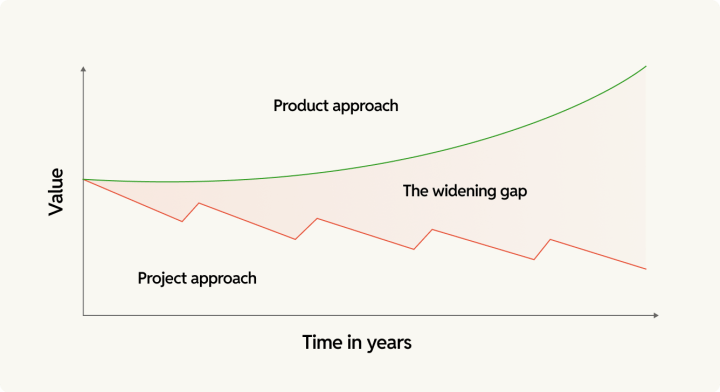
Your website needs to be treated as a product, a continuous investment, a platform built to change, and a team that ships. WordPress promises you all.
We’re a WordPress VIP Gold Agency Partner with 15+ years of enterprise WordPress experience. Book a free assessment to see how a product-minded approach could transform your digital platform.
On this page


Leave a Reply