







A year of reinvention as we turn 17
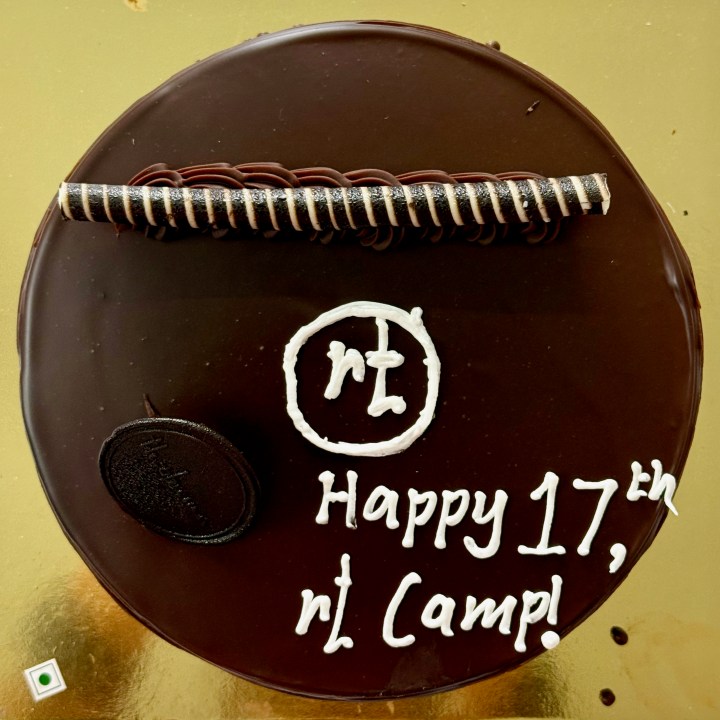
rtCamp turns 17 today.
We already share a comprehensive business update every year with our Year in Review, so I’ll skip the numbers here. This is about what’s ahead and the choices we’re making to get there.
The short version: rtCamp is reinventing itself. The longer version is the rest of this post.
We are going all in on AI
The entire software industry is going through a moment of existential confusion right now. Everyone I talk to—clients, partners, or competitors—is trying to figure out what AI means for them. If you are not a part of the X(Twitter) bubble, most are still using AI as a chatbot or are in the “let’s add a chatbot” phase.
We decided early that half-measures weren’t going to cut it.
We’re in the middle of an internal transformation that puts AI at the center of how we work. All of how we work. Not just the publishing-heavy, client-facing parts that are obvious. Hiring, training, marketing, sales, delivery, engineering, ongoing maintenance. The entire operation.
The mental model we keep coming back to is Ford’s assembly line. Look at rtCamp as one big production line, then ask at every station, Where can AI accelerate the process, reduce human effort in the mundane, and allow creative solutioning at scale—that we are known for.
Two things work in our favor here.
Our WordPress stack already dominates the publishing and marketing side. And now, most of our internal business processes run on Frappe/ERPNext—open-source software where we own the data and all metadata. That makes our system of records AI-ready in a way that companies locked into proprietary tools simply can’t match.
We reorganized leadership around these shifts too. We now have a CTO, CDO, and CMO who think about AI natively when it comes to engineering, delivery, and marketing. If AI changes how software gets built, you need that thinking at the top, not as an afterthought.
We’d rather be early and uncomfortable than late and irrelevant.
Where we’re placing bets
Four areas. And a fifth that deserves its own line.
Personalized, adaptive websites: We’re building websites that respond to who’s visiting. Dynamic content blocks, personalized CTAs, navigation that shifts based on where someone is in their journey. Powered by AI models, not complex rule engines that are impossible to maintain after the first month.
Editorial Capabilities: Rethinking the entire editorial process. Ideation, drafting, SEO, scheduling, approvals. AI can handle a lot of this, and handle it well. We’re building assistants that understand your brand voice, draft in your style, flag SEO gaps before you publish. The goal is editorial velocity, keeping it true to your brand, without sacrificing quality.
Discoverability: Audiences are increasingly finding brands through ChatGPT, Perplexity, Google AI Overviews. If your content isn’t structured and authoritative enough for these models to surface, you’re invisible to a growing segment of your audience. SEO as we knew it is evolving. While the difference isn’t big, but the organizations that adapt early will have an edge.
On the delivery side, we’re rethinking engineering practices using with human in the loop processes—code generation, testing, documentation, review cycles. Early results are changing our cost structures and speed in ways that surprised even us.
The fifth bet: Service business itself. As software development becomes cheaper and faster, those $100K SaaS subscriptions might transform into custom software requirements. And agencies like rtCamp can come in to deliver this with a blend of judgement, creativity and experience of managing enterprise complexity.
WordPress: The Tortoise Winning the AI Era
The initial heroes of AI hype were Lovable and Replit. Build an app from a prompt, ship it in minutes, who needs a CMS anymore?
During this hype phase, WordPress got AI-ready at the platform level. The Abilities API shipped in 6.9, transform the platform into a more reliable, composable system that seamlessly integrates with third-party code and AI. WordPress 7.0 brings AI Connectors in wp-admin and an MCP adapter that lets AI agents discover and invoke site capabilities directly.
All of this while real businesses and enterprises can depend on the platform.
Last year, I griped about analyst firms like Gartner overlooking WordPress in favor of monolithic DXPs. This year, though, Gartner has named WordPress VIP a Customer’s Choice in the Magic Quadrant for Web Content Management—a ranking driven entirely by client feedback.
The tortoise was building the right foundation all along. WordPress is still our biggest business, and we continue to grow and expand in WordPress and Woo.
OnePress, a year later
While we have been delivering this for years, we invested in OnePress as an architecture framework throughout the year and shipped six open-source plugins: OneMedia, OneUpdate, OneDesign, OneLogs, OneSearch, and OneAccess. We published the architectural framework in our handbook that ties everything together.
The pitch is simple: solve these problems once, not forty times. Share governance, share a design system, share code across your network. The entire framework is open-source. Any team can pick it up. One solid foundation with shared plumbing means you ship faster and spend less on maintenance. The value is in how it changes the math.
We’re seeing strong pull from conglomerates and large publisher networks this year too.
Frappe and ERPNext are becoming a real business
Our Frappe/ERPNext practice is on track to become a double-digit percentage of revenue. And that’s while our WordPress business continues to grow. For a bet we placed a few years ago, that’s a meaningful number.
We’re a Frappe Partner now, with a team of 20+, two certified consultants, and a certified Frappe Engineer. Some of our largest implementations, possibly among the biggest ERPNext deployments anywhere, are wrapping up soon. We’ll share details post-launch.
What makes this interesting is the compounding effect. Frappe and ERPNext also power GoDAM (digital asset management and video for WordPress) and EasyEngine (WordPress server management, now running 75,000+ sites). These products are proving out our product-building capability, and we’re already exploring industry-specific products for a couple of clients. I see this becoming an important service vertical soon.
Coming up: WordCamp Asia and CloudFest
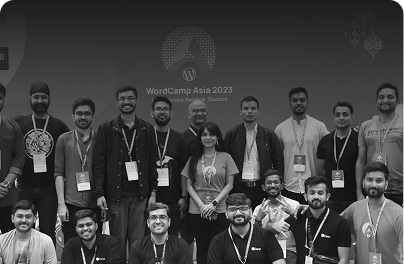
A few of us will be speaking at WordCamp Asia in Mumbai. I’m also speaking at CloudFest in Germany and joining a panel on AI.
The WordPress community is actively figuring out its relationship with AI—how websites get built, managed, personalized. We are actively participating in those rooms, and shaping those conversations.
What ties this together
If I had to put a word to the year, it would be resilience. We’re doubling down on WordPress. Growing our ERPNext practice. Expanding our open-source footprint for the enterprise. And delivering all of this with AI at the center.
The delivery model is changing. The technology is changing. What a “website” even means is changing. We’d rather lead that change than react to it.
Seventeen years in, the conviction has solidified: open source is the way forward for enterprise, and AI will accelerate this shift. The organizations that own their stack, contribute to their platform, and move fast are the ones that will lead.
As we step into our 18th year, we’re betting on it. Again.
On this page


Leave a Reply