








Why WordPress is a proven platform for enterprise digital ecosystems
Your SaaS vendors raised prices by 15% last year. They’ll do it again this year.
Meanwhile, you’re paying for Marketing’s six platforms, it’s twelve subscriptions, and Finance’s unused features. The bill keeps growing, but you’re mandated to cut costs without sacrificing speed.
For a decade, the enterprise playbook was simple: accumulate tools, move fast, figure out integration later. That strategy is dead!
Global IT spending hit $6 trillion in 2026, but here’s the catch: most of that increase isn’t funding innovation. It’s going straight to SaaS vendors, which run 12-15% annual price hikes.
Now you’re stuck with a challenging mandate: Cut costs. Reduce vendor sprawl. But don’t sacrifice agility.
The solution isn’t apparent until you see it: stop renting software and start owning it.
WordPress for enterprise sites is not just trendy. Its economics also make sense.
Let’s get to the details!
Who uses WordPress today?
The “WordPress isn’t enterprise-ready” narrative died years ago when large enterprises like Penske Media, News Corp, Al Jazeera, and Cox Automotive migrated to it. But when The White House and NASA shifted to WordPress, this conversation became irrelevant.
WordPress now powers 43.2% of the web.
More than 60% of websites that use a CMS rely on WordPress.
These aren’t just edge cases. There’s proof of concept at the highest level:
Government & Public Sector
The White House

They migrated from Drupal, which cost $6 million annually to maintain. If WordPress meets NIST and FISMA security standards for the presidential website, it can likely meet your compliance requirements. Learn the story behind its launch in this WordCamp presentation.
NASA
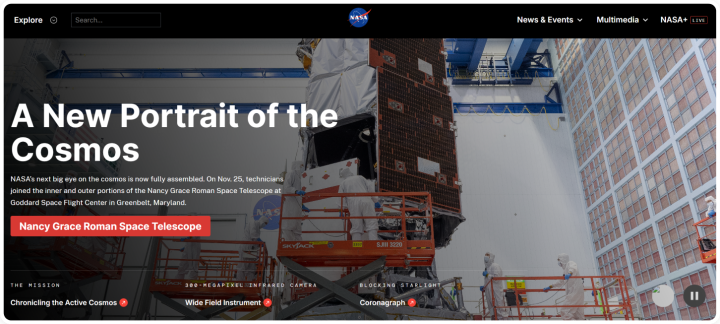
They consolidated hundreds of disparate sites onto WordPress VIP. During the 2024 solar eclipse, they handled over 1 billion requests in 4.5 hours. Zero downtime. When NASA trusts WordPress for mission-critical infrastructure, the “it’s just a blogging platform” argument collapses.
Media & Publishing
News Corp
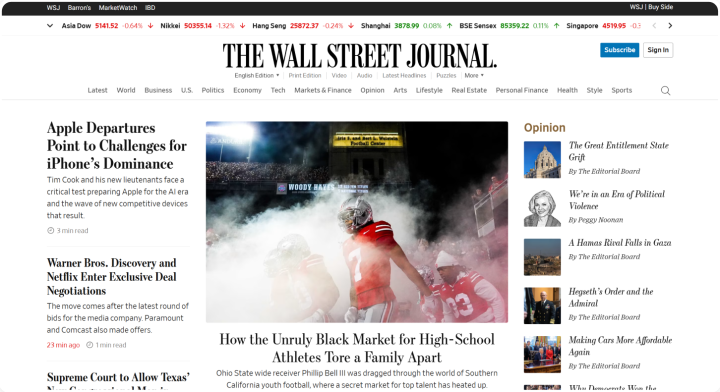
The parent company of The Wall Street Journal, The New York Post, and The Sun relies on WordPress VIP to power its digital newsrooms. They accelerated their content production by 60% after switching to the new WordPress block editor. News Corp’s WordPress platform auto-scales to absorb traffic spikes during breaking global events.
Penske Media Corporation (PMC)

Home to Rolling Stone, Variety, and Billboard, PMC manages a multi-brand portfolio on a unified WordPress codebase, serving 179 million monthly active users. A new feature developed for one brand (e.g., a video player) deploys instantly across the entire portfolio. That’s either impossible or super costly in hard-to-customize, proprietary environments.
Finance & Technology
Pasqal
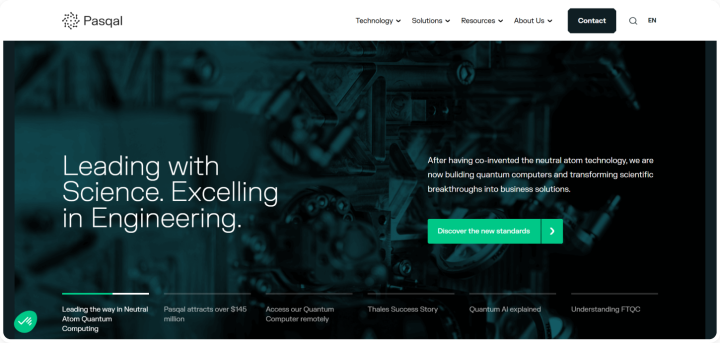
A leader in neutral-atom quantum computing, Pasqal runs their global website on WordPress VIP. For a company operating at the cutting edge of quantum technology, WordPress provides the performance and security posture their brand demands.
Standard Chartered Bank
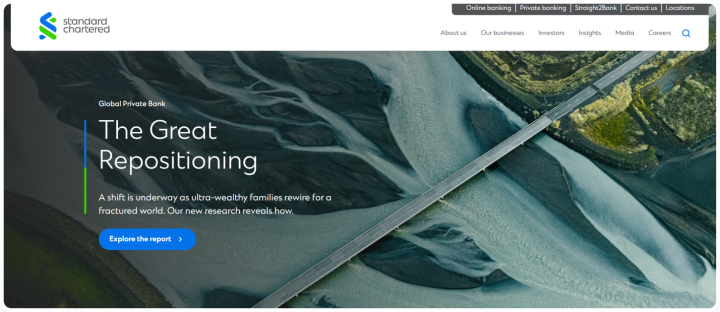
In a defining case study of enterprise transformation, Standard Chartered replatformed its global digital platform from proprietary OpenText TeamSite to WordPress. This new platform now serves 45 markets, meets SOC 2 requirements, and has up to 500 users publishing content daily.
Salesforce
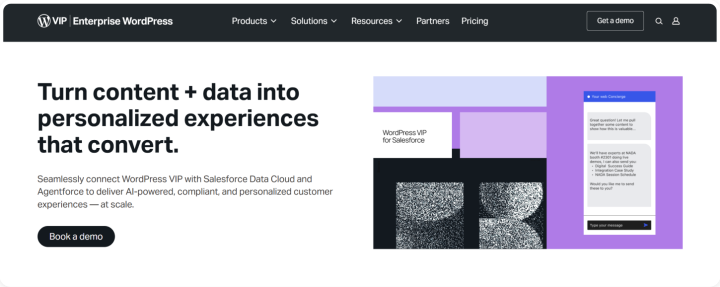
A titan of enterprise software uses WordPress for critical marketing properties. The relationship deepened in 2025 with the Agentforce integration, connecting Salesforce Data Cloud directly to WordPress.
Non-profit organizations
Grist
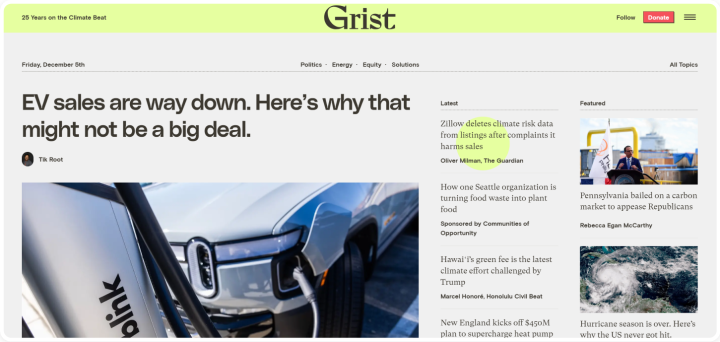
A nonprofit newsroom focused on climate and environmental justice rebuilt its entire digital presence on WordPress. They manage complex editorial workflows, membership systems, and multi-channel content distribution through a unified WordPress architecture.
Automotive
Cox Automotive
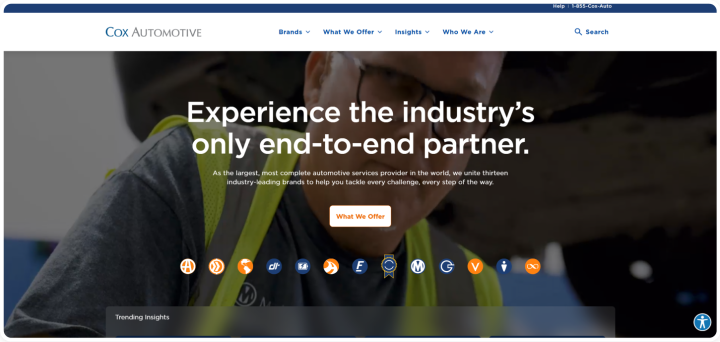
They consolidated eight distinct brand sites onto a unified WordPress codebase. Through rtCamp’s OnePress framework, they achieved 70-80% code reuse across their entire portfolio while increasing lead conversions by 100%.
FleetNet America
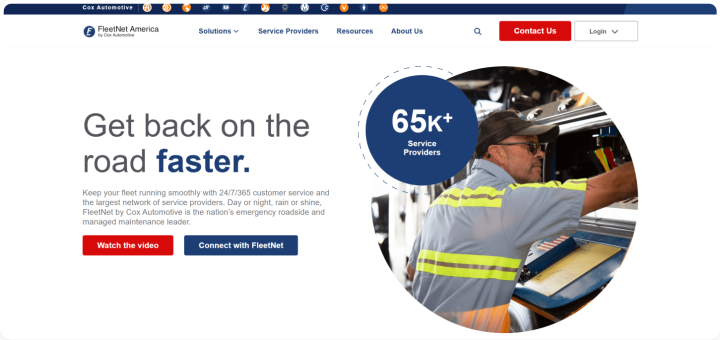
The largest provider of commercial vehicle repair and maintenance services operates a mission-critical service network on WordPress. Their platform connects thousands of service providers across North America, handling real-time dispatch, vendor management, and fleet operations at scale.
Why WordPress for enterprise sites?
Marketing trends don’t drive the WordPress migration wave. There are many benefits to migrating to WordPress. Let’s discuss them all!
Open source advantage: Ownership in an era of vendor lock-in
Proprietary platforms operate as walled gardens. The vendor dictates your roadmap, your pricing, and your data access policies. You’re renting the features, not owning them.
WordPress is licensed under the GPL (General Public License). That means:
- Zero licensing fees for core software.
- Complete ownership of your code and data.
- Portability without permission. Move hosts, change agencies, or bring development in-house without losing your digital assets.
When your vendor knows you can leave, pricing negotiations change.
Talent abundance vs. scarcity: The human capital equation
Adobe Experience Manager (AEM) requires developers with specialized certifications who are in chronic short supply and command salaries exceeding $140,000 annually. Likewise, it’s the same with other proprietary platforms like Sitecore and Kentico.
Good luck scaling when there are only a handful of qualified candidates in your metro area.
WordPress runs on PHP and JavaScript, two of the most widely used languages on Stack Overflow. The talent pool is global and deep. You can:
- Hire enterprise agencies like rtCamp (us), 10up, or Human Made
- Build internal teams
- Tap freelancers or smaller agencies for overflow work
Scarcity drives up costs. Abundance drives innovation.
Cost efficiency and innovation: The TCO revolution
Here’s the math that’ll make you pay attention.
A mid-to-large enterprise implementation of AEM or Sitecore runs $250,000 to $1,000,000+ annually in licensing fees alone. Before implementation. Before talent. Before hosting (if you’re self-hosting).
WordPress core software costs: $0.
Managed enterprise hosting (WordPress VIP, Pagely) delivers platform-as-a-service benefits (automated backups, security, and scaling) at a fraction of the cost of proprietary licensing. Industry benchmarks show WordPress VIP reduces TCO by up to 40%.
But here’s where it gets strategic: That budget you’re no longer spending on licensing? You can redirect it to custom development, AI integrations, and UX optimizations that drive competitive advantage.
You can shift from your expenditure on licenses to innovation. Same budget. Different outcomes.
Scalability & flexibility: Better for growth without replatforming
When paired with a dedicated infrastructure provider, WordPress scales to handle massive traffic spikes and enterprise-level complexity.
Standard Chartered manages 150+ sites on its WordPress platform across 45 markets, with up to 500 people working in the CMS daily.
Penske Media deploys features across its entire multi-brand portfolio instantly. Their portfolio spans 22 brands (including Variety and Rolling Stone) that collectively serve 179 million monthly active users and generate 101 million video views.
Cox Automotive used WordPress and rtCamp’s OnePress framework to consolidate 8 brand websites onto a single WordPress multisite platform. This resulted in improved efficiency, faster site launches, enhanced performance, increased visitor engagement, and lead conversions.
The architecture scales both vertically (handling traffic spikes) and horizontally (adding new brands, markets, or capabilities) without re-platforming.
Enterprise-level security and compliance: Dismantling the myth
But WordPress gets hacked all the time!
No. Poorly maintained WordPress sites with 47 outdated plugins and no security updates get hacked. There’s a difference.
The WordPress security conversation is now moving towards Zero Trust Architecture, where you assume everything is compromised until proven otherwise.
Enterprise WordPress implementations enforce:
- Immutable infrastructure: Production file systems are read-only. Malicious code physically cannot persist on the server.
- FedRAMP Moderate authorization: WordPress VIP achieved this certification, the same level the U.S. federal government requires for cloud providers handling sensitive data. That’s continuous auditing by federal agencies.
- Software supply chain hardening: In response to the EU Cyber Resilience Act, the WordPress ecosystem has adopted Software Bills of Materials (SBOMs) and automated dependency scanning.
WordPress enterprise solutions meet the most stringent security standards, from federal government requirements to global banking compliance.
Multi-brand governance: One codebase, infinite brands
Managing a portfolio of distinct brands used to mean maintaining separate sites, duplicating development efforts, and providing inconsistent experiences.
WordPress enables unified codebase architectures where:
- Design systems deploy across all brands instantly
- Security updates happen once, not per site
- New features are inherited across the portfolio
- Brand consistency improves while development costs drop
Cox Automotive proved this by partnering with enterprise WordPress specialists, achieving 70-80% code reuse across eight brand sites.
API-driven content distribution: Omnichannel by default
Your content doesn’t just live on websites anymore. It powers mobile apps, digital signage, IoT devices, and AI agents.
WordPress is API-first by design. REST and GraphQL APIs allow you to use WordPress as a content hub that feeds:
- Mobile applications
- Progressive web apps (PWAs)
- Third-party platforms (Salesforce, HubSpot, custom tools)
- AI agents that need structured content access
This composable architecture is why Gartner predicts 70% of enterprises will abandon monolithic suites by 2026.
High performance: Speed as a competitive advantage
Page speed isn’t a technical metric. It’s a revenue metric.
- Google uses Core Web Vitals as a ranking factor
- Users abandon slow sites
- Every 100ms of latency costs conversions
Enterprise WordPress implementations deliver sub-200ms Time to First Byte (TTFB) globally through:
- Edge computing: Running logic at Cloudflare Workers or Vercel Edge Functions
- Advanced caching: Server-level, object caching, CDN integration
- Optimized infrastructure: Containerized deployments, auto-scaling
When Pasqal migrated to WordPress VIP, their Core Web Vitals scores aligned with their quantum computing brand, rising from a mere 66 to 90.
Rapid adaptability to change: Ship features in weeks, not quarters
Proprietary DXP upgrades (e.g., Sitecore) with highly customized environments can take 9+ months. And that’s coming from a Sitecore-focused agency.
In comparison, WordPress upgrades are a cakewalk. Just ensure you take the proper precautions: take a full site backup, and thoroughly test on staging before pushing to production.
From our experience, even when building new WordPress projects, leveraging composable ecosystems and pre-built block libraries typically gets a project from kickoff to MVP in 3-5 months.
In a market where AI disrupts industries quarterly, that difference is an existential risk.
Integration-friendly architecture: Plays well with your existing stack
WordPress doesn’t force you into an ecosystem. It integrates with yours:
- CRM systems: Salesforce, HubSpot, Microsoft Dynamics
- Marketing automation: Marketo, Eloqua, Pardot
- Analytics platforms: Google Analytics, Adobe Analytics, custom data lakes
- E-commerce engines: WooCommerce, Shopify, custom solutions
- AI platforms: OpenAI, Anthropic, custom LLMs via the Abilities API
The philosophy is simple: WordPress should be the best CMS, not the only tool in your stack.
Future-proofing with AI and extensibility: Ready for what’s next
The Abilities API (launched in WordPress 6.9) transforms WordPress from a passive CMS into an active operating system.
Other code and apps, including AI agents, can now query your WordPress site, discover capabilities, understand the required inputs, and execute tasks autonomously. This enables workflows like:
- Auto-generate landing pages for high-value CRM leads.
- Publish investor updates when SEC filings are approved.
- Update product catalogs when inventory systems sync.
While your competitors are still manually publishing content, you can be building autonomous systems. We’ll discuss more on this in a later section.
A mature ecosystem for enterprises
Here is what you inherit when you choose WordPress for Enterprise sites: two decades of battle-tested infrastructure, an active community of over 1,000 annual contributors, and a platform that powers over 43% of the web.
Enterprise hosting partners
These platforms aren’t traditional web hosts. They’re specialized WebOps and infrastructure partners focused specifically on WordPress. They offer 24/7 WordPress-specialized support and SLAs that guarantee uptime for mission-critical applications.
WordPress VIP
WP VIP is the gold standard for government and high-security sectors seeking WordPress. It holds FedRAMP Moderate authorization, meeting the strict security standards of NASA, The White House, and the Department of Veterans Affairs. If security and compliance are your bottlenecks, this is your answer. rtCamp is a WordPress VIP Gold Agency Partner.
Pagely
They’re an AWS Advanced Technology Partner, running 100% on Amazon Web Services (AWS). That means you can integrate most other AWS services with your Pagely-managed instance. Their custom architecture decouples resources, enabling on-demand PHP workers for massive scale. rtCamp is also a partner with Pagely.
Kinsta
The offer enterprise WordPress hosting on Google Cloud, using their compute-optimized C2 and C3D virtual machines. They employ isolated container technology at every site and perform continuous uptime checks (every 2–3 minutes), ensuring an immediate response to any downtime.
Read our enterprise WordPress hosting handbook for an in-depth look.
Core software & contributions
The WordPress project balances rapid innovation with rock-solid stability, a rarity in modern software development.
Consistent innovation
The platform ships 2–3 major releases annually, ensuring you always have access to modern features such as the Block Editor, the Interactivity API, and the Abilities API. You get all that for free, with no investment.
Thousands of contributors worldwide
A single release, such as WordPress 6.6, involves roughly 640 contributors from 53 countries and 129 companies (including Google, Automattic, and rtCamp), ensuring diverse testing and rigorous code review.
For WordPress 6.8, that number increased to 924 contributors from at least 73 countries. With 653 contributions from at least 57 contributors, rtCamp ranked second among companies ranked by contributions. This was the 33rd consecutive release featuring core contributions by rtCamp.
Backwards compatibility guarantee
WordPress maintains a strict backward compatibility philosophy. Code written ten years ago often runs today without modification, lowering your Total Cost of Ownership (TCO) compared to frameworks that require costly refactoring every few years.
Long-term support and security updates
The WordPress Security Team provides long-term support, often backporting critical security patches to older versions (historically as far back as 4.1) to protect the entire ecosystem.
For example, WordPress 4.1 was released in December 2014, and it continued receiving security updates until July 2025. As of this writing (November 2025), WordPress 4.7 (released in December 2016) will continue to receive security patches. Again, this reduces your TCO.
Expert engineering-first agencies
At the top tier (WordPress VIP Gold Partners like us), you’ll find enterprise WordPress experts with teams of 50-300+ people.
By hiring them, you’re recruiting a team that has migrated Fortune 500 companies to WordPress and survived to tell the story. All of these agencies architect solutions for global scale, regulatory compliance, and multi-brand governance.
When you partner with us, you retain a proven team that has successfully migrated brands such as FleetNet America, Grist, and others. While all top-tier WordPress agencies manage global scale and compliance—the same as us—our engineering-first DNA makes us the definitive choice for complex enterprise WordPress development services.
If you’re unsure about how to approach WordPress on your enterprise setup, you can start with WordPress enterprise consulting services. Based on the outcome, you can then take the appropriate steps.
What’s coming in 2025-2026: WordPress keeps evolving
Three developments will define WordPress for enterprise over the next 18 months.
The AI Building Blocks: Infrastructure for the intelligent enterprise
Most enterprises approaching AI face a trap: build custom integrations with specific providers, then watch those integrations become technical debt when models change or pricing shifts.
The AI Building Blocks initiative solves this by establishing a standardized infrastructure layer that decouples the application from underlying AI models.
Four components make this work:
- PHP AI Client SDK: The bedrock of the stack. Its primary value is vendor neutrality. Rather than hard-coding integrations with OpenAI or Anthropic (which create vendor lock-in and high refactoring costs), this SDK provides a unified abstraction layer. It’s WordPress-agnostic and built collaboratively with the wider PHP community.
The WordPress AI Client SDK sits on top of the PHP AI Client SDK. It gives WordPress plugins and themes a uniform way to work with different AI providers and models without reinventing credential management or HTTP integrations.
- Model Context Protocol (MCP) Adapter: While the SDK enables WordPress to interact with AI, the MCP Adapter enables AI to control WordPress. Based on an open standard, this adapter transforms WordPress into an MCP Server, enabling external AI agents to discover and execute tasks on the site securely.
This enables AI assistants to perform complex, multi-step tasks: draft a post, generate an image, and schedule it, all using a standardized protocol.
- AI Experiments Plugin: Serving as a canonical reference implementation, this plugin allows engineering teams to test and validate AI features (title generation, content assistance) in a controlled environment before deploying them to production.
- The fourth component, the cement binding them all together into a solid foundation, is the Abilities API. Its implications go way beyond just AI.
The Abilities API: WordPress becomes programmable
Arguably, the most significant architectural shift in WordPress 6.9 is the Abilities API.
Historically, WordPress functionality (“publish a post” or “refund an order”) was buried in code, making it hard for external systems to find.
The Abilities API transforms WordPress into a functional core by creating a centralized, machine-readable registry of everything a site can do. That reduces technical debt and makes it easier to integrate WordPress code with both first-party and third-party services.
What’s an “Ability”?
An Ability is a registered unit of functionality that includes a rigorous schema defining exactly what inputs it requires (e.g., a Product ID), what outputs it returns (e.g., an integer value), and who has permissions to execute it (e.g., an Administrator or Shop Manager).
This means that whether an action is triggered by a human clicking a button, an external REST API call, or an autonomous AI agent, the same strict security and governance rules are enforced.
This standardization allows three powerful implementation patterns for enterprises:
- Single-shot actions: Simple, predictable tasks like “Summarize this PDF” or “Translate this page.”
- Agentic loops: Complex workflows where an AI agent plans a sequence of actions (e.g., “Analyze the top-performing posts from last month and draft a summary report”).
- Deterministic workflows: Fixed processes where AI handles specific steps within a rigid business logic structure.
The Abilities API is already driving innovation in high-stakes enterprise environments, including agentic commerce with WooCommerce and at WordPress VIP.
Data liberation project
WordPress’s ongoing Data Liberation Project builds universal, high-fidelity importers and exporters for every major website builder and CMS: Wix, Drupal, Tumblr, and proprietary flat-file systems. If you can export it, WordPress can import it without data loss.
More importantly, your data is never held hostage. You get complete portability and compliance with data sovereignty regulations.
It’s your strategic insurance. Even if you never migrate away from WordPress, the ability to leave gives you leverage in every negotiation.
Gutenberg Phase 3 (Collaboration)
By 2026, Gutenberg Phase 3 will have matured, bringing Google Docs-style real-time collaboration (Nov 2025 update) directly into the CMS. It’s already under beta at WP VIP.
The technical implementation uses Conflict-Free Replicated Data Types (CRDTs), the same technology that Google Docs uses to handle concurrent edits. Features include:
- Block-level comments – feedback pinned to specific paragraphs
- Suggest mode – edits require approval
- Presence indicators – see who’s editing in real-time
For enterprises like CNN or News Corp, this collapses time-to-publish from days to hours by eliminating the inefficient “document handoff” workflow.
Gutenberg Phase 4 (Multilingual)
The roadmap for 2026 includes early rollout of Gutenberg Phase 4, bringing native multilingual support to WordPress Core.
Enterprise benefit: Native multilingual support reduces database bloat (often caused by plugins duplicating posts for each language) and improves query performance. Global enterprises can manage multi-region sites (example.com/en, example.com/fr, example.com/jp) with a unified, performant architecture.
Infrastructure modernization
Edge computing is pushing WordPress performance further. Leading hosts (along with CDNs) are already pushing dynamic logic to the edge.
For example, using technologies like Cloudflare Workers or Vercel Edge Functions, WordPress sites execute personalization logic, A/B testing, and security filtering at the network edge, milliseconds from the user.
By executing logic at the network edge (e.g., 300+ global locations), you can:
- Personalize content based on user location, device, or behavior
- Run A/B tests without JavaScript overhead
- Filter malicious requests before they reach your origin server
- Cache intelligently based on user context
The result? Dynamic, personalized WordPress sites that perform like static sites. This is how enterprise WordPress sites deliver both personalization and performance.
rtCamp case studies: Enterprise success with WordPress
While WordPress provides the foundation, success at enterprise scale requires implementation expertise. rtCamp has defined the patterns for scaling WordPress in complex environments.
Pasqal: Quantum computing meets digital excellence
Pasqal, a leader in neutral-atom quantum computing, had a rigid legacy web infrastructure that couldn’t keep pace with its marketing needs. Performance bottlenecks undermined their high-tech brand identity.
The solution
rtCamp migrated Pasqal to WordPress VIP and implemented a component-based design system using the Block Editor. This allowed the marketing team to build complex, visually rich pages via drag-and-drop without breaking brand guidelines.
The outcome
- Core Web Vitals scores improved significantly:
- Total score: From 66 → 90
- First Contentful Paint (FCP): From 1.9s → 1.2s
- Largest Contentful Paint (LCP): From 7.9s → 3.7s
- Total Blocking Time (TBT): From 70ms → 0
- Cumulative Layout Shift (CLS): From 0.055 → 0
- The move to WordPress VIP provided the requisite security posture for a company operating in a sensitive technology sector.
- The Pasqal marketing team can now quickly spin up landing pages and promotions, accelerating their time-to-market.
Read the complete Pasqal case study.
Cox Automotive: Leading the industry with unified architecture
Cox Automotive struggled with a fragmented ecosystem of eight distinct brand sites. Development efforts were duplicated. Brand consistency was low (2%). Maintenance costs were unsustainable.
The solution
rtCamp implemented OnePress, a framework that consolidated all sites onto a single, unified codebase. The Cox Design Library became a centralized repository of reusable Gutenberg blocks and patterns.
The outcome
- 70-80% code reuse across all brand sites
- 21% faster website performance and significantly reduced launch times
- 103% increase in visitor engagement
- 100% increase in lead conversions
That’s both cost savings and revenue growth.
Read the complete Cox Automotive case study.
WordPress is the strategic enterprise choice
The question for enterprise leaders in 2026 isn’t Is WordPress robust enough?. That question has been answered. Definitively.
The real question is, can we afford the rigidity and cost of proprietary software in an age of open innovation?
WordPress offers something no proprietary platform can match:
- Agility: Low-code publishing experience combined with enterprise application framework capabilities.
- Power: Handles billions of requests and integrates with complex banking and CRM backends.
- Freedom: GPL licensing guarantees digital sovereignty and insulates you from SaaS inflation.
With the Gutenberg project, the AI Building Blocks (including Abilities API), and the Data Liberation project, WordPress has future-proofed itself for the next decade of digital evolution. And the innovation doesn’t stop there: WordPress is continually under development.
Going forward, your enterprise has two choices:
- Path 1: Continue paying escalating licensing fees to vendors who control your roadmap, hold your data hostage, and force you into ecosystem lock-in.
- Path 2: Migrate to an open-source platform that 43% of the web trusts, backed by enterprise hosting infrastructure that meets federal security standards, with a composable architecture that integrates with your existing stack.
The migration wave has started. The question is whether you’ll lead it or watch your competitors move faster while you’re locked into another 3-year enterprise license agreement.
Partner with enterprise WordPress experts like rtCamp to deploy WordPress and position your enterprise to lead in the composable, AI-driven future.
On this page


Leave a Reply