



Scaling multi-brand publishing: Private Media’s WordPress VIP multisite transformation
Private Media, one of Australia’s most respected digital publishers, is known for its independent journalism across multiple sectors. Its portfolio includes Crikey for fearless political commentary, The Mandarin for public sector leadership, and SmartCompany for SME and startup coverage.
While each of its publications was performing well on the WordPress VIP platform, separate and legacy infrastructure meant duplicated efforts, siloed editorial teams, and delayed go-to-market timelines. rtCamp was therefore engaged to unify the development process, and support a robust decision-making framework to manage all brand websites and address operational inefficiencies.
Unified multisite foundation designed for efficient publishing at scale
Challenge
As Private Media prepared to expand its portfolio, they needed a standardized content management system for all the Private Media brands. Each publication needed to retain its editorial tone, design system, and reader experience, while benefiting from the efficiencies of shared infrastructure. A complex undertaking that demanded careful planning and execution to ensure a smooth transition.
Solution
Migrate three independent brand sites, previously hosted on WordPress VIP, onto a single, robust WordPress VIP Multisite platform. Accelerate the development roadmap with a single code base and a shared design system in order to scale Private Media’s digital presence more effectively across properties.
Outcome
“This standardized approach has allowed us to roughly halve our ongoing development costs and achieve higher code quality, all while making progress on our roadmap quicker than ever before.”
– Kevin Cooper, Chief Growth Officer, Private Media.
End-to-end site migration ensuring zero data loss and content integrity
Among the three properties, migrating The SmartCompany site posed a significant technical challenge. Unlike the others, it was running on a separate WordPress VIP multisite instance, which meant it first needed to be decoupled into a standalone site before it could be brought into the new multisite network.
This process demanded meticulous data management for several key reasons. First, it was crucial to preserve all existing content (articles, images, metadata) and ensure its correct transfer to the new unified multisite. Second, user roles and permissions had to be accurately transferred for business continuity, proper access control, and editorial workflows.
Challenges during migration, such as overlapping author identities across brands, needed to be solved. For instance, if an author had written articles on one site, and another author with the same name had written different articles on another site, the migration process could merge these two authors into one in the new system, potentially creating problems with incorrect author archive links and attribution of content.
rtCamp addressed these challenges by developing custom scripts to map and merge user data, identifying and resolving conflicts such as duplicate usernames or email addresses, and ensuring that each author’s contributions were correctly attributed to them in the unified system. Multiple tests were conducted to prevent data corruption and ensure that all content and user-related functions operated correctly in the new environment. Once verified, SmartCompany was successfully integrated into the unified multisite platform, completing one of the most critical milestones in the project.
Consistent brand identity across all publications
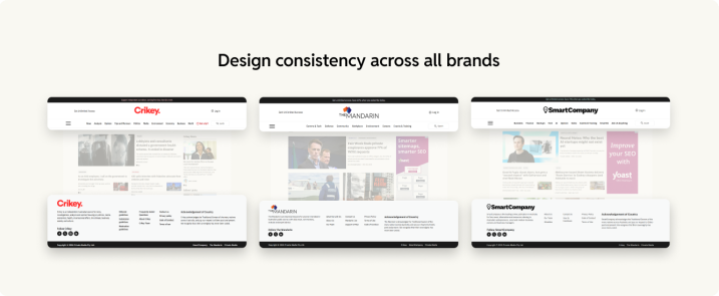
While the backend was being unified, Private Media was equally focused on maintaining the front-end distinctiveness of each brand. A single, generic theme wouldn’t be enough. The solution needed to leverage a unified foundation to power three distinct reader experiences, protecting each title’s established tone and style.
rtCamp collaborated closely with Private Media to develop a custom, multisite-compatible WordPress theme. This framework needed to accommodate the unique content and branding needs of each publication while reinforcing Private Media’s overall brand identity. rtCamp worked closely with Private Media’s design team to understand their brand guidelines, target audiences, and desired user experience for each publication within the framework and best practices of the WordPress VIP platform.
The result was a modular theme architecture that allowed each site to maintain its distinct character while adhering to Private Media’s overarching brand standards.
Faster content production with more control for editors
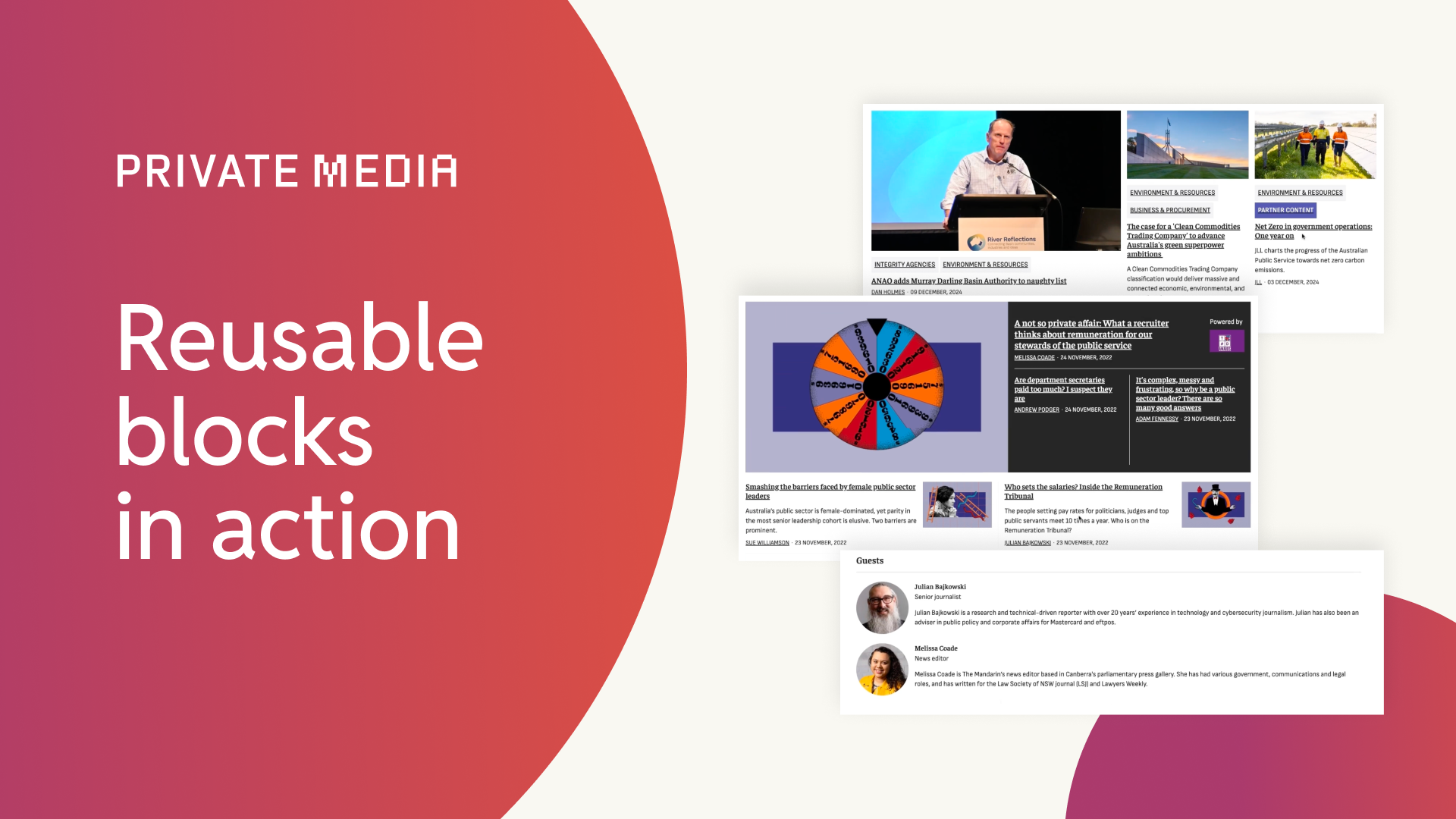
Private Media wanted its editorial teams to have more freedom in how they presented stories, without needing to rely on developers for every layout change. In response, rtCamp designed a set of flexible content-building tools built directly into the publishing experience.
These tools allowed editors to create visually rich pages using simple drag-and-drop blocks. From single-article grids to multi-article layouts, each block was designed to support the structure and storytelling formats Private Media uses across its publications.
To speed things up even more, rtCamp introduced a library of ready-made design patterns that editors could reuse across stories. These patterns helped teams move fast while keeping layouts consistent with the brand’s visual identity.
To keep readers engaged, rtCamp also added an infinite scroll experience that let one story flow into the next, without breaking the reading experience. Together, these tools brought new life to Private Media’s storytelling while streamlining editorial workflows across all their brands.
“Private Media was stuck dealing with decades of tech debt and disparate bespoke approaches across the existing sites, including different sets of legacy code, templates, plugins, 3rd-party applications, and approaches to common features. We needed a more standardized and streamlined approach to managing our publications, in order to maximize the sustainable impact of our journalism, and ultimately to scale more effectively. rtCamp guided us through the planning and transition to an ideal standardized architecture. They truly understand the needs of publishers, setting us up to be able to operate independently without relying on developers for every update.”
– Kevin Cooper, Chief Growth Officer, Private Media.
Documentation kit: Centralized guide for stakeholders
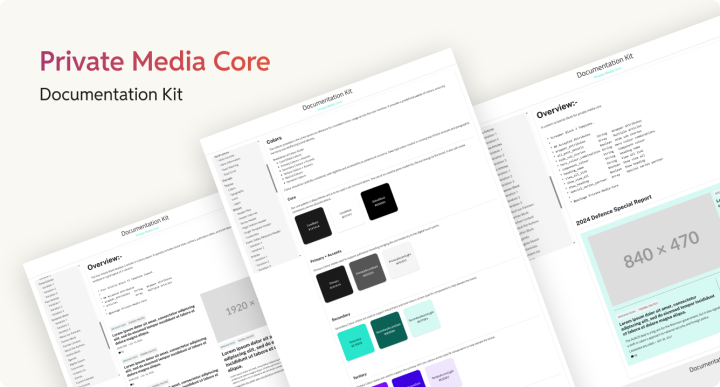
Foreseeing how managing a multisite network with three distinct publications could eventually create scaling and consistency challenges, rtCamp partnered with Private Media to set up a dedicated documentation subsite: The Documentation Kit.
This internal site lives within the multisite network and serves as a single reference point for developers, editors, and QA teams alike. It catalogs every approved block, component, typography rule, and style guideline used across the network.
For developers, it is a living blueprint that accelerates development without guesswork. For editors, it’s a quick way to find the right building blocks that align with each publication’s visual identity. For QA, it serves as a ready-made checklist to ensure components behave and render as expected, every time.
By aligning workflows across teams, the Documentation Kit helps Private Media maintain a consistent, high-quality experience across all three of its publications, without sacrificing editorial flexibility or brand character.
Higher engagement and monetization through personalized experiences
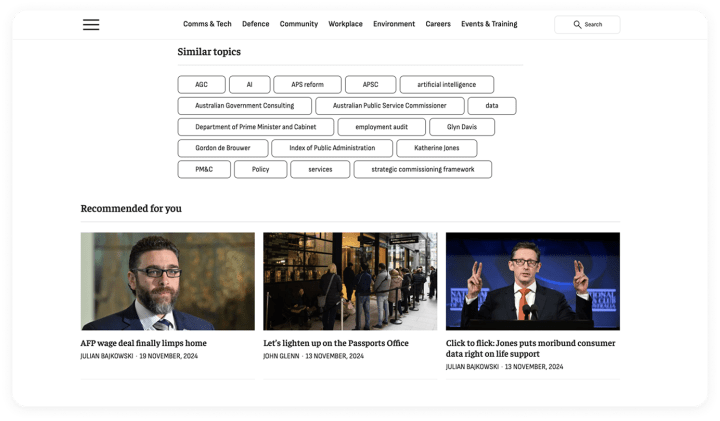
To help readers find stories that mattered to them, rtCamp integrated Lytics, a customer data platform that tracks user behavior and preferences. This meant that articles could be recommended based on what readers cared about, keeping them engaged and coming back for more.
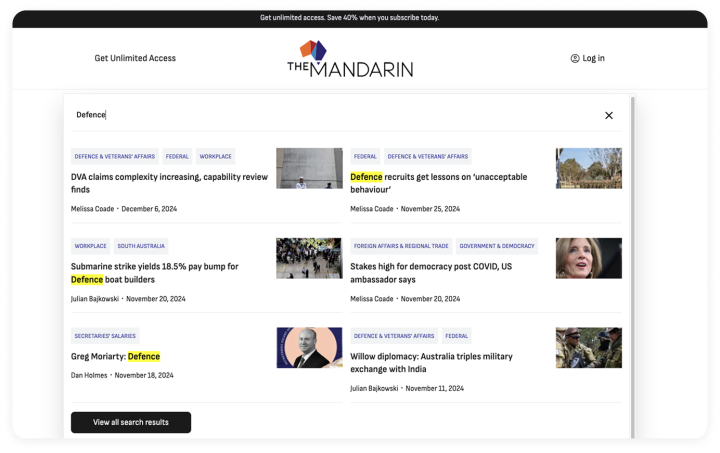
For an intuitive search experience, rtCamp chose Algolia to power a fast, typo-friendly search experience across all of Private Media’s sites. The best part, even non-technical users could manage it easily, thanks to a user-friendly interface and simple indexing tools.
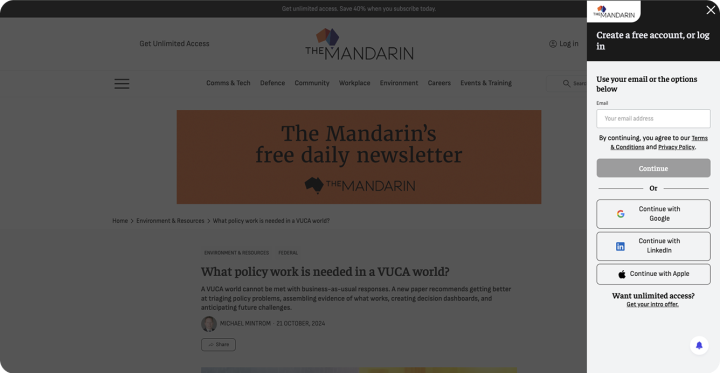
On the subscription side, Zephr was brought in to manage paywalls and user access across multiple publications. Private Media had already used Zephr in its single-site instances, so this integration felt like a natural step toward unifying their offerings across the entire platform.
To support revenue goals without disrupting the reader experience, Ad Inserter Pro was implemented. It allowed Private Media to place ads precisely where they made sense, customized for different audiences across publications.
The results validated this approach. In a year-on-year comparison, one of Private Media’s publications saw a 128% increase in total clicks and a 169% increase in total impressions, validating the success of the unified platform and ongoing strategic alignment.
50% lower dev costs, accelerated roadmap & acquisition ready
Powered by rtCamp’s scalable WordPress multisite infrastructure, Private Media is now easily able to expand its portfolio — as it did in July 2025 with the acquisition of Pinstripe Media. The platform’s stability, adaptability, and consolidation-friendly design mean every new property can be seamlessly unified within the existing ecosystem, allowing the team to focus on audience growth, content innovation, and strategic opportunities ahead.
As reported, Private Media has been able to roughly reduce the ongoing development costs by 50% and accelerate the development roadmap.
Our evolving partnership
What started as an on-demand staffing arrangement gradually evolved into a deeper strategic partnership. Initially, rtCamp executed project components under Private Media’s direction. Over time, rtCamp assumed shared leadership of the project, driving the technical architecture and implementation in line with Private Media’s long-term vision.
Following the successful publication revamp, rtCamp transitioned to a maintenance and consultancy role, providing ongoing support and strategic guidance for future development.


rtCamp’s thoughtful and low-disruption approach to the migration made the process smooth and seamless. This partnership has laid the groundwork for a powerful platform that can support advanced features and expansion—the proof being our recent acquisition of Pinstripe Media, adding 4 additional media properties to our portfolio. rtCamp remains a reliable partner as our platform continues to grow and evolve.
Kevin Cooper
Chief Growth Officer
Conclusion
With a unified WordPress Multisite setup, Private Media now benefits from a cohesive brand identity, streamlined editorial workflows, and a scalable infrastructure that supports their long-term growth and operational goals. Their storytelling is also more immersive, enhanced by custom blocks. Furthermore, the seamless maintenance of their third-party stack within the new multisite setup ensures continuous performance and stability.
Want to see how a unified platform can simplify your publishing operations? Let’s start the conversation.