







Migrating Enterprise Publishers from Craft CMS to WordPress
Craft CMS is a capable platform for developer-driven teams, but it is not built for enterprise operations or the demands of high-traffic publishing. WordPress is. rtCamp offers a Craft CMS to WordPress migration service backed by 300+ completed enterprise migrations.
Trusted by the world’s leading brands
Fortune 500 marketing teams, award-winning publishers, and global automotive networks choose WordPress. Then they pick rtCamp to build it right.








WordPress VIP Gold Agency Partner since 2016


Top Partner Innovator Award
WPVIP 2022
Why publishers are re-evaluating Craft CMS
Craft CMS was built by Pixel & Tonic for developers who want control over every field and template. That philosophy made it popular with digital agencies. It also created a ceiling: Craft CMS’s editorial interface, plugin ecosystem, and infrastructure integrations were never designed for operations at scale.

A plugin ecosystem that cannot match enterprise requirements
Craft CMS offers 730+ plugins as of mid-2025. WordPress offers 61,000+. Your team must find a Craft plugin, commission a custom module, or maintain an integration in-house. WordPress has first-party integrations for Piano, Zephr, Google Ad Manager, and AMP, maintained by their vendors.

A developer talent pool that does not scale
Hiring a Craft CMS developer means competing for a small pool of Craft-trained engineers. Glassdoor lists under 100 open Craft developer roles at any given time. WordPress powers 43% of the entire web, with 50,000+ developers available globally. When your lead developer leaves, replacing Craft CMS expertise takes months. Replacing WordPress expertise takes days.

A pricing model built for agencies, not publishers
Craft CMS Pro licenses start at $399 per site, with renewals at $99. Enterprise licensing requires a custom negotiation with Pixel & Tonic. Prices increased in March 2024. WordPress VIP, the enterprise-grade hosting platform used by Al Jazeera, TIME, and TechCrunch, starts at $25,000 per year and delivers a Forrester-verified 415% ROI over three years, with 40% lower total cost of ownership.

A framework migration that affects every plugin you depend on
In October 2025, Pixel & Tonic announced at Dot All 2025 that Craft 6 will abandon the Yii 2 framework in favor of Laravel. Craft 6 Beta is targeted for Q3 2026, with general availability in Q4 2026. Every plugin your team depends on will require updates or compatibility testing. WordPress is stable and has no framework migration.

An editorial experience built for developers, not editors
Craft CMS’s control panel is a developer’s canvas, requiring substantial configuration before a non-technical editor can use it. Gutenberg in WordPress gives editors a visual block editor with full-site editing (FSE), real-time collaboration, and no developer involvement for day-to-day content updates.

An AI story without an enterprise path
Craft Cloud launched in 2024 with early AI tooling for content authoring. There is no published roadmap for enterprise AI workflows, bring-your-own-key model access, or MCP server integration. The Abilities API shipped with WordPress 6.9, and rtCamp’s engineers contributed directly to the AI features.
What clients say

We’ve been very impressed with the flexibility and expertise of rtCamp’s team, who implement a wide range of website features and functionalities for us. Their work continues to add so much value to our articles and award-winning special features. We’ve also been thankful to rtCamp for consistently being available and on point for last minute projects and tasks. The team also chimes in when it’s time to optimize and improve different core components of our site, on top of juggling multiple moving parts day to day. Lastly, collaborating and communicating with the rtCamp team has been a real pleasure. I look forward to what else we can accomplish together.
Jason Castro
Product Manager


rtCamp’s thoughtful and low-disruption approach to the migration made the process smooth and seamless. This partnership has laid the groundwork for a powerful platform that can support advanced features and expansion—the proof being our recent acquisition of Pinstripe Media, adding 4 additional media properties to our portfolio. rtCamp remains a reliable partner as our platform continues to grow and evolve.
Kevin Cooper
Chief Growth Officer


rtCamp has helped our organization in so many ways! Their incredible wealth of knowledge and experience around the WordPress platform has brought peace-of-mind to our teams and leadership. Not only have they built us sustainable enterprise-class WordPress sites, but they have also helped streamline our go-to-market process with the solutions they have helped us architect.
Randall Benson
Senior Manager, Marketing Operations
What you stand tolose in a migration, and how we protect it
A 2024 Search Engine Journal study of 892 domain migrations found the average site took 523 days to recover organic search traffic. 17% never recovered at all.

All content structured and validated
We map every Craft CMS entry type, custom field, Matrix block, and asset to its WordPress equivalent: custom post types, ACF or native meta fields, Gutenberg blocks, and the Media Library. Craft’s GraphQL API and native export tooling make content extraction well-documented. The complexity is on the WordPress side, and that is where our migration engineers focus.

Media workflows rebuilt and improved
Craft CMS’s asset management is developer-configured per project. We audit your image transforms, focal point settings, and CDN pipeline before the first line of migration code is written. Your media assets arrive in WordPress with correct attachment metadata, alt text, the same CDN routing, and no interruption to image delivery.

SEO equity preserved, not rebuilt
Every URL pattern in your Craft CMS site is mapped before migration begins. We generate redirect rules for any structural changes, carry over canonical tags and Open Graph metadata, and verify sitemap output against your existing Search Console data. We do not launch until your redirect coverage is 100% and your SEO tooling is reporting clean.

Your integrations keep working
Craft CMS integrations require custom modules. WordPress integrations use vendor-maintained plugins or APIs with published documentation. We map every integration in your current Craft stack: Piano, Zephr, Google Ad Manager, Parse.ly, Connatix, AMP, and any custom webhooks your editorial workflow depends on, and rebuild each integration in WordPress.

Zero downtime for a live operation
We use blue-green deployment: your Craft site stays live at its existing domain while the WordPress environment is built, tested, and validated in parallel. DNS cutover takes minutes. If something unexpected occurs, we roll back in the same time frame. We have a 100% completion rate across every migration we’ve taken on.
Why choose rtCamp as your Craft CMS WordPress migration agency
We have helped 300+ enterprise organizations migrate to WordPress from platforms including Kentico, Drupal, and custom-built CMS environments. Teams that need to migrate from Craft CMS to WordPress face the same set of challenges, and we have solved each of them on similar platforms.

Known for complex WordPress migrations
Our Cox Automotive engagement consolidated 7 sites across 12 months, delivering 103% higher engagement and 100% lead conversion growth. We built a centralized Gutenberg component library that reduced design reuse overhead by 70-80%. Complex is our default project type.
Purpose-built editorial workflows
We have built publishing platforms for Al Jazeera, Penske Media (Rolling Stone, Variety, Billboard), Grist, Private Media, and The Indian Express. Grist’s platform earned a Sigma Award and an ASME National Magazine Award. We build for editorial teams who publish every day, not for agencies who hand off and disappear.

Deep expertise. Proven track record.
rtCamp has been a WordPress VIP Gold Agency Partner since 2016. Our engineers contribute to WordPress core, maintain open-source tools including SnapWP and GoDAM, and built OnePress, the Multisite governance product now running 1,000+ site networks for enterprise publishers.
Our work
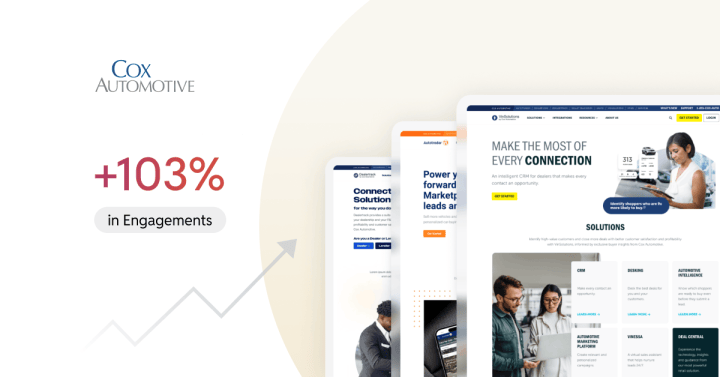
Cox Automotive achieves 103% higher engagement & 100% more leads with OnePress
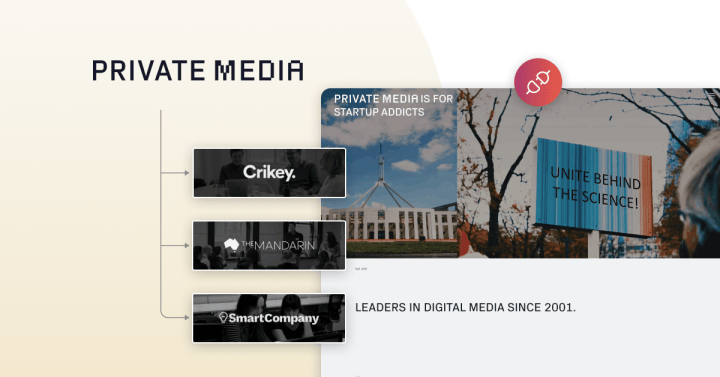
Scaling multi-brand publishing: Private Media’s WordPress VIP multisite transformation
How we migrate fromCraft CMS to WordPress
rtCamp by the numbers
What you gain on WordPress
WordPress powers 43% of all websites. Publishers move to it because it is the only CMS where the infrastructure, editorial tooling, and developer ecosystem all operate at enterprise scale without vendor dependency.

An open-source foundation you actually own
No per-site license fee. No framework migration forcing plugin audits across your stack. No custom contract renegotiation when your traffic doubles. WordPress VIP starts at $25,000 per year for enterprise hosting. A Forrester Total Economic Impact study (commissioned by Automattic) found WordPress VIP delivers 415% ROI over three years, with 40% lower total cost of ownership and 45% lower development costs.

A publishing experience editors actually want to use
Gutenberg gives editors a visual block editor for every content type. Full Site Editing removes developer dependency for layout changes. Custom block libraries let your design team publish new page templates without a code deployment. Editors file fewer support requests. Developers spend less time on content-layer maintenance.

AI without a vendor in the middle
WordPress supports any AI provider through its plugin layer and the native Abilities API that shipped with WordPress 6.9. You bring your key, select your model, and swap providers without a platform migration. rtCamp’s own engineers have contributed to the WordPress AI infrastructure.

Headless architecture when you need it
WordPress decouples cleanly. Al Jazeera, TechCrunch, BBC America, and Fortune all run WordPress as a headless content API with React or Next.js front-ends. If your Craft CMS site is already headless, the architecture pattern should be familiar. The WordPress REST API and GraphQL via WPGraphQL are both production-tested at scale.

Enterprise infrastructure through WordPress VIP
WordPress VIP achieved FedRAMP Moderate ATO in April 2025, the only enterprise WordPress platform to do so. The platform served 22 billion requests during the 2024 US election with 100% uptime.

Multi-brand governance with OnePress
OnePress runs WordPress Multisite networks of 1,000+ sites from a single installation. Shared component libraries, centralized governance, per-brand editorial permissions, and unified analytics rollups. If your Craft CMS setup manages multiple brands as separate installs, OnePress consolidates them into a single governed platform without merging your editorial teams.
Craft CMS to WordPress: a side-by-side comparison
| Factors | Craft CMS | WordPress |
| Open source core | Yes (commercial license required for Pro/Enterprise) | Yes (fully open, no license required) |
| Annual platform cost | $399 license + Craft Cloud hosting + custom Enterprise negotiation | Free core; WordPress VIP from $25,000/year |
| Plugin ecosystem | 730+ plugins (July 2025) | 61,000+ plugins |
| Developer talent pool | Niche: under 100 open roles on major job boards | 50,000+ developers globally |
| FedRAMP authorization | Not available | WordPress VIP: Moderate ATO, April 2025 |
| Framework stability | Craft 6 moves from Yii 2 to Laravel; plugin audits required | No framework migration; stable backward-compatible core |
| Multisite at scale | Multisite built in; managed per-install | OnePress: 1,000+ sites per installation |
| AI model flexibility | Craft Cloud AI tooling; no published BYOK roadmap | Bring your own key; any provider; Abilities API in WP 6.9 |
Start with a no-obligation discovery, not a contract
You will speak with an enterprise migration specialist who will assess your Craft CMS environment, estimate the timeline and complexity, and outline a path forward. You will leave the call with clarity on what this migration involves, whether you work with us or not.
Our Craft CMS to WordPress migration services include 20 hours of free technical consulting, with no pitch deck.
Trusted by enterprise publishers across North America, Europe, and Asia-Pacific.
Craft CMS to WordPress Migration FAQs
Get answers to some of the most frequently asked questions about migrating websites from Craft CMS to WordPress!
Most enterprise Craft to WordPress migrations complete in 12 to 16 weeks. The timeline depends on content volume, the complexity of your Matrix block configurations, the number of third-party integrations, and whether you need a Multisite architecture built in parallel. We scope each migration in the discovery phase and give you a written timeline before work begins.
A 2024 Search Engine Journal study of 892 domain migrations found an average recovery time of 523 days and a 17% rate of sites that never recovered. Those figures reflect migrations with poor redirect coverage, structural URL changes without proper canonical handling, and no pre-launch SEO validation. We run full redirect audits, validate sitemap output against your Search Console data, and do not release until redirect coverage is complete.
WordPress VIP served 22 billion requests during the 2024 US election with 100% uptime. Bloomberg, CNN, NBC, and TIME all run WordPress at scale. If you are running Craft CMS on standard agency hosting, the infrastructure ceiling you move to on WordPress VIP is substantially higher than what you are leaving.
Craft entry types become WordPress custom post types. Custom fields map to ACF fields or native block attributes. Matrix blocks become Gutenberg block groups or patterns. Categories and tags carry over directly. Craft’s asset volumes migrate to the WordPress Media Library, with CDN configuration rebuilt to match your current delivery setup. What does not migrate directly: Craft Sections with conflicting URL structures require manual mapping decisions, and any custom front-end templating in Twig must be rebuilt in PHP and React, depending on your WordPress architecture.
Visitor segmentation logic, conditional content rules, and A/B test configurations built as custom Craft modules do not migrate directly. They must be rebuilt on WordPress using your chosen personalization or experimentation tool (Optimizely, VWO, AB Tasty, or a native WordPress plugin). We treat the migration as an audit opportunity: we document every personalization rule in your current setup, assess which ones are actually in use, and recommend a rebuild approach that removes the ones that never delivered results.
Piano, Zephr, Google Ad Manager, Parse.ly, Connatix, and AMP all have WordPress plugins or API integrations maintained by their vendors. We map your current integration configuration in Craft CMS, rebuild each integration in WordPress, and run parallel testing against your live Craft CMS environment before cutover. Revenue-critical integrations are validated in staging with real traffic sampling before we touch DNS.
Extracting content from Craft CMS is a solved problem. Craft’s GraphQL API is well-documented, and the content model is deterministic. The migration risk lies in building a WordPress environment that correctly replicates your content architecture, handles your editorial workflows under production load, and preserves your SEO footprint through cutover. We have done that 300+ times on platforms with comparable or greater complexity.
We use blue-green deployment. Your Craft CMS site stays live at its existing domain until the WordPress environment passes all pre-launch checks. DNS cutover takes minutes. If a critical issue surfaces after launch, we roll back to Craft in the same time frame. Our 100% completion rate reflects not just successful launches but also the pre-launch validation process that prevents the scenarios that require rollback.
We consolidate multi-brand Craft CMS installations into a WordPress Multisite network using OnePress, our Multisite governance product. OnePress supports 1,000+ sites per installation with shared component libraries, per-brand editorial permissions, and centralized governance. Our Cox Automotive migration unified 7 sites across 12 months. Each brand retained its editorial independence while sharing infrastructure, design components, and platform management.
The comparison depends on your current Craft CMS licensing, hosting, and developer maintenance expenses. A single Craft Pro license at $399 plus annual renewal at $99, multiplied across a multi-site environment, plus Craft Cloud or third-party hosting, plus ongoing custom module maintenance, adds up to a figure most teams have not calculated explicitly. We build a three-year total cost comparison during the discovery engagement, using your actual figures, against a WordPress VIP deployment of equivalent scale.
Every migration includes 30 days of Hypercare: a dedicated engineer on standby, daily check-in calls, and rapid response to post-launch issues. After Hypercare, we offer managed services and growth engagements on terms your team controls. We do not lock you into a retainer to maintain what we built. If you want to bring the platform in-house after migration, we document everything and hand it over cleanly.