







Move from Optimizely before a renewal locks you in again
Your editorial team deserves WordPress, an open platform you control. CNN, Bloomberg, TIME, TechCrunch, and thousands of publishers have already made the switch.
Trusted by the world’s leading brands
Fortune 500 marketing teams, award-winning publishers, and global automotive networks choose WordPress. Then they pick rtCamp to build it right.








WordPress VIP Gold Agency Partner since 2016


Top Partner Innovator Award
WPVIP 2022
Why publishers are re-evaluating Optimizely
Optimizely started as an A/B testing pioneer. A 2020 acquisition by Episerver merged it with a legacy .NET CMS, and the rebranded platform now sells Optimizely One, a bundled suite covering content, DAM, experimentation, personalization, and commerce under one contract.

You pay for modules you don’t use
Optimizely does not publish pricing. Web experimentation alone runs $36K–$113K+ per year, depending on traffic tier. Add CMS, DAM, personalization, and the Content Marketing Platform, and annual spend commonly exceeds $200K before implementation. Moving to WordPress VIP costs 2–3x less at a comparable scale.

Scarce developer talent
Optimizely PaaS runs on .NET, a more expensive talent pool than that of PHP or JavaScript. A limited number of Premier Platinum Partners exist globally, so there is no agency market to keep prices in check. Compare that to a global WordPress developer market with numerous agencies competing for your business, supported by an ecosystem of 60,000+ plugins.

AI gated behind a credit meter
In May 2025, Optimizely moved its AI layer, Opal, to credit-based billing separate from your platform license. Optimizely controls which models Opal uses, which are currently Google Gemini and Anthropic Claude via Vertex AI. You do not choose the model, and you do not bring your own keys. Full Opal capability requires SaaS CMS and the Content Marketing Platform running together, which most Optimizely CMS customers on PaaS do not have.

Lock-in by architecture
Optimizely’s proprietary .NET content model and closed integrations make leaving expensive by design. Personalized content, visitor group assignments, and experiment configurations cannot be exported at all. They must be rebuilt on any destination platform.

A roadmap shaped by experiments, not editorial
Experimentation and optimization drive Optimizely’s product investment. Publishing workflow features get resourced accordingly. The CMS-CMP publishing integration, which connects editorial planning to the CMS, still had not shipped for SaaS CMS as of mid-2025, confirmed in Optimizely’s own developer community.
Hear their success stories


We’ve been very impressed with the flexibility and expertise of rtCamp’s team, who implement a wide range of website features and functionalities for us. Their work continues to add so much value to our articles and award-winning special features. We’ve also been thankful to rtCamp for consistently being available and on point for last minute projects and tasks. The team also chimes in when it’s time to optimize and improve different core components of our site, on top of juggling multiple moving parts day to day. Lastly, collaborating and communicating with the rtCamp team has been a real pleasure. I look forward to what else we can accomplish together.
Jason Castro
Product Manager


rtCamp’s thoughtful and low-disruption approach to the migration made the process smooth and seamless. This partnership has laid the groundwork for a powerful platform that can support advanced features and expansion—the proof being our recent acquisition of Pinstripe Media, adding 4 additional media properties to our portfolio. rtCamp remains a reliable partner as our platform continues to grow and evolve.
Kevin Cooper
Chief Growth Officer


rtCamp has helped our organization in so many ways! Their incredible wealth of knowledge and experience around the WordPress platform has brought peace-of-mind to our teams and leadership. Not only have they built us sustainable enterprise-class WordPress sites, but they have also helped streamline our go-to-market process with the solutions they have helped us architect.
Randall Benson
Senior Manager, Marketing Operations
What you stand tolose in a migration, and how we protect it
A Search Engine Journal study of 892 domain migrations found the average site takes 523 days to recover organic search traffic. 17% never recovered at all, even after 1,000 days. CMS platform migrations that preserve your domain carry lower risk, but only when URL structures, redirects, and metadata are handled correctly.

Every piece of content, structured and validated
We map every Optimizely content type to WordPress custom post types and taxonomies: articles, landing pages, media assets, editorial metadata, and custom fields. This is hands-on migration engineering, not a CSV dump.

Your media workflows, rebuilt and improved
Optimizely media assets migrate to WordPress’ centralized media library with bulk operations, focal point cropping, native video embeds, and custom gallery blocks. Multi-brand publishers get a shared content hub across all properties.

SEO equity preserved, not rebuilt from scratch
URL structures, canonical signals, 301 redirects, XML sitemaps, schema markup, and internal linking all transfer to your new WordPress environment. We run automated validation against your existing site to catch issues before launch.

Your integrations keep working without flinching
Paywalls, ad tech, analytics, syndication feeds, marketing automation, and video partnerships all connect to WordPress through established patterns. We have rebuilt these across dozens of publisher environments.

Zero downtime for a live operation
Your new WordPress site runs in parallel on staging while automated content sync maintains near-real-time parity with Optimizely. DNS switches during a low-traffic window. Your Optimizely environment stays available for rollback.
Why choose rtCamp for this migration
We’ve done 300+ enterprise CMS migrations from AEM, Sitecore, Kentico, Arc XP, Drupal, and custom .NET platforms. The hard part is not extracting content from Optimizely, because their Content Delivery API produces well-documented exports. It is building a WordPress environment that handles your editorial workflows, scales for your traffic, and gives your team a better daily experience.

Known for complex WordPress migrations
Cox Automotive’s multi-brand portfolio: 7 sites delivered in 12 months, 103% higher engagement, 70–80% design reuse across a centralized component library, and 100% lead conversion growth.
Purpose-built editorial workflows
We have built custom Gutenberg blocks and editorial workflows for Al Jazeera, PMC (Rolling Stone, Hollywood Reporter), and Grist. Grist won a Sigma Award and an ASME National Magazine Award.

Exceptional work, done right
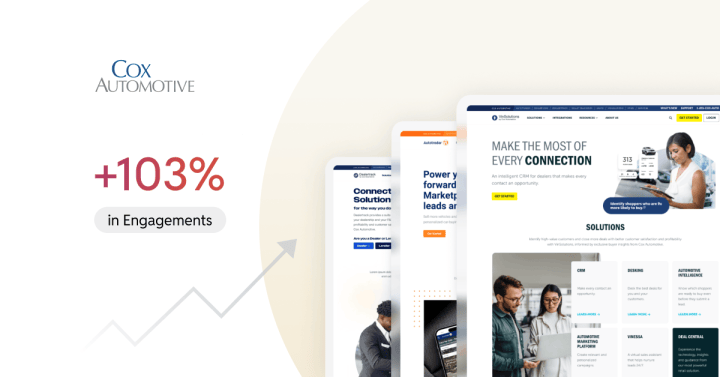
Cox Automotive achieves 103% higher engagement & 100% more leads with OnePress
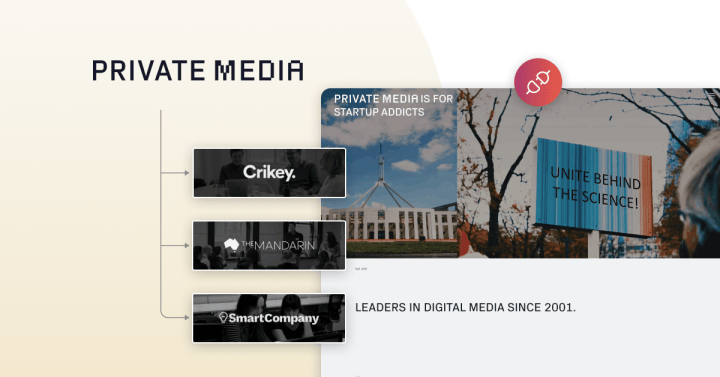
Scaling multi-brand publishing: Private Media’s WordPress VIP multisite transformation
How we migrate fromOptimizely to WordPress
rtCamp by the numbers
What you gain on WordPress
WordPress runs on 43% of all websites globally. At the enterprise tier, it serves the White House, NASA, TIME, Bloomberg, CNN, and The Indian Express.

An open-source foundation you own
There’s no per-seat pricing, credit meter on your AI, or certified partner shortlist controlling costs. WordPress VIP starts at $25K per year. A Forrester TEI study found WordPress VIP delivers 415% ROI over three years, with 40% efficiency gains and 45% lower development costs versus prior platforms.

A publishing experience made for editors
Gutenberg gives editorial teams a visual, block-based editor where they control layouts, embed rich media, and publish without needing developer help. Full Site Editing extends that control to templates, patterns, and global site design, built into WordPress core with no paid add-on required.

AI without a vendor in the middle
Connect OpenAI, Anthropic, Gemini, or any model directly. When a better model ships, you only switch the API key without amending the contract, reforecasting credit, or roadmap dependency. WordPress 6.9’s Abilities API makes AI capabilities available to any plugin.

Headless architecture when you need it
Al Jazeera runs GraphQL with React. TechCrunch uses React and Redux. BBC America and Fortune use Next.js. All are powered by WordPress. Traditional rendering and headless delivery from the same backend. Your engineering team decides the framework, and no approved list is required.

Enterprise infrastructure through WordPress VIP
WordPress VIP earned FedRAMP Moderate Authority to Operate (ATO), the only managed WordPress platform with this authorization. TIME handles 100,000+ requests per second with 100% uptime with this platform. During the 2024 US election, VIP served 22 billion requests without downtime. SOC 2 Type II, ISO 27001, and Parse.ly analytics are built in.

Multi-brand governance with OnePress
Our OnePress platform provides centralized governance across a multi-brand WordPress network, with shared design systems, unified security policies, media management, and coordinated updates across every property. WordPress multisite manages 1,000+ sites from a single installation.
Optimizely vs WordPress
| Factors | Optimizely | WordPress |
| Annual platform cost | $200K+ common for full suite | 2–3x lower at comparable scale |
| Open-source core | No | Yes |
| Vendor lock-in | High: .NET stack, limited certified partners | Full independence at every layer |
| AI model choice | Vendor-selected models, credit billing | Any model, bring your own keys |
| FedRAMP authorization | Not authorized | WordPress VIP: Moderate ATO (Apr 2025) |
| Developer talent pool | Niche .NET specialists | Global PHP/JS talent pool, 60,000+ plugins |
| Multisite scale | Limited per-brand customisation | 1,000+ sites per install, full autonomy |
Start with a
no-obligation discovery
Speak with an enterprise migration specialist who will assess your Optimizely environment, estimate the timeline and complexity, and outline a path forward. You will leave the call with clarity on what this migration involves, whether you decide to work with us or not.
20 hours of free technical consulting included, with no pitch deck.
Trusted by enterprise publishers across North America, Europe, and Asia-Pacific.

Optimizely to WordPress migration FAQs
Get answers to some of the most frequently asked questions about migrating websites from Optimizely to WordPress!
It depends on content volume, integration complexity, and editorial workflow requirements. A mid-size site with standard integrations typically takes 12–16 weeks. Complex multi-brand operations with custom paywalls and bespoke editorial tools take longer. Our discovery phase gives you a precise timeline before work begins.
Not if the migration is executed properly. We preserve URL structures, implement comprehensive 301 redirects, transfer all SEO metadata, and validate the entire redirect map before launch.
Yes. WordPress VIP served 22 billion requests during the 2024 US election with 100% uptime. TIME handles 100,000+ requests per second. FiveThirtyEight sustained 132,000 requests per second during election coverage. Bloomberg, CNN, NBC Universal, and News Corp all run on WordPress.
Optimizely content types are exported via the Content Delivery API and mapped to WordPress custom post types, ACF field groups, and taxonomies. Page templates become block patterns. Personalized content, visitor group assignments, and experiment configurations cannot be exported from Optimizely. These must be rebuilt on WordPress, and any honest migration scope accounts for that work.
These do not migrate directly. Optimizely’s experimentation layer is proprietary and non-exportable. We audit your current setup during discovery and scope the rebuild on WordPress using third-party tools or custom integration. Many publishers find the transition a useful moment to audit which experiments actually ran and which were configured and forgotten.
All major publisher integrations have established WordPress connection patterns: Piano and Zephr paywalls, Google Ad Manager and header bidding, Parse.ly (built into WordPress VIP), Apple News syndication, AMP, and Connatix video. We audit every integration during discovery and rebuild each one in your new environment.
The hard part of a CMS migration is building the right WordPress environment, not just extracting content from the source platform. Optimizely’s Content Delivery API produces well-documented exports. Building a WordPress architecture that handles your editorial workflows, scales for your traffic, and gives your team a better publishing experience requires deep WordPress expertise. We have 300+ enterprise migrations and over a decade of publisher-specific work, including Al Jazeera, PMC, Grist, and Private Media.
Our blue-green deployment means your Optimizely site stays fully operational throughout the migration. Automated content sync keeps both platforms current until the DNS switch. If anything unexpected occurs at launch, we revert DNS, and your Optimizely site is immediately live again. In 300+ migrations, we have maintained a 100% completion rate.
Our OnePress platform was built for this. OnePress provides centralized governance across a multi-brand WordPress network, with shared design systems, unified security policies, centralized media management, and coordinated updates. Cox Automotive saw a consolidation of 8 brand sites, 70–80% design reuse, and 103% higher engagement.
A mid-size media publisher on Optimizely’s full suite typically spends $700K–$1M over three years once implementation and development costs are included. A comparable WordPress VIP deployment runs $300K–$500K over the same period. The Forrester TEI study puts WordPress VIP’s three-year ROI at 415%. We provide detailed cost projections during the discovery phase.
Every migration includes 30 days of Hypercare, with dedicated monitoring, priority bug fixes, and performance optimization. After Hypercare, you choose from our managed WordPress services or manage it internally. WordPress’s open architecture means you are never locked into our services.