





Trusted by the world’s leading brands








What multisite changes
Built on multisite. Measured in speed, governance, and scale
Below are recent case studies showing the operational impact of enterprise multisite development.
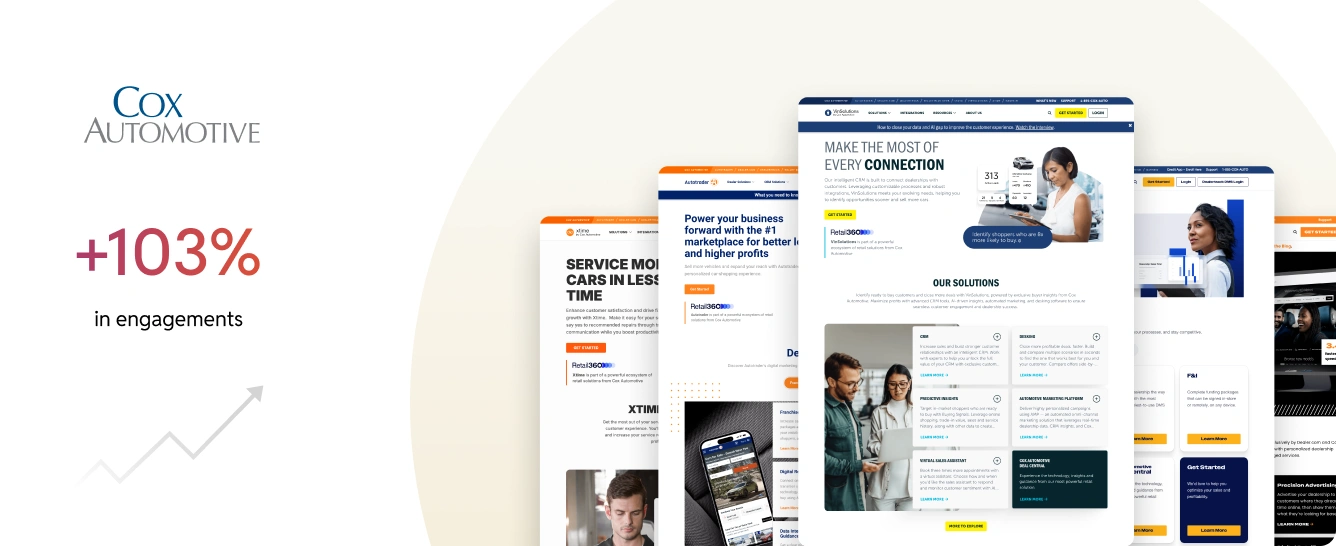
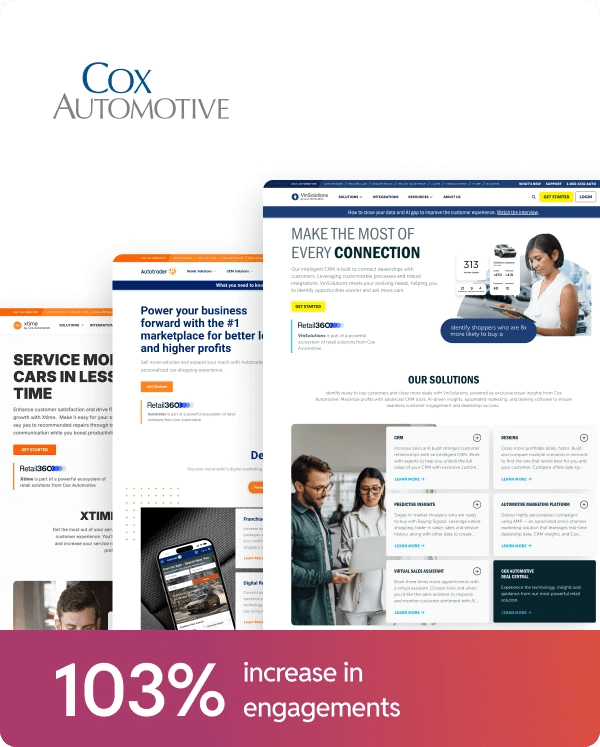
Cox Automotive

Cost savings from previous platform to WordPress is substantial. Quality was above and beyond expectation.
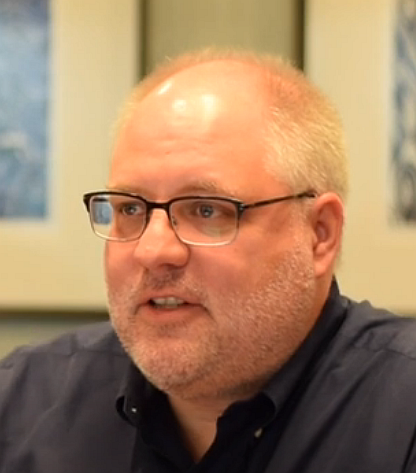
Chuck Konfrst
Director User Experience
In 12 months
rtCamp migrated 8 brands to one platform in 12 months
2% to 50% brand consistency
Cox Automotive standardized the design system, editorial experience, and architecture across brands.
Private Media

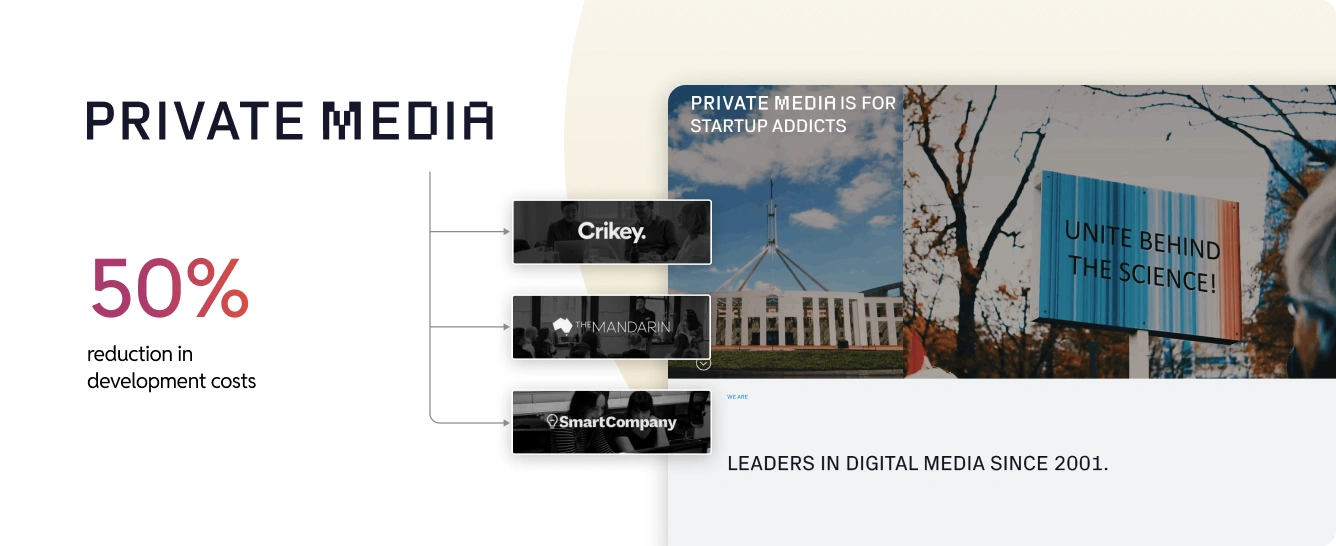
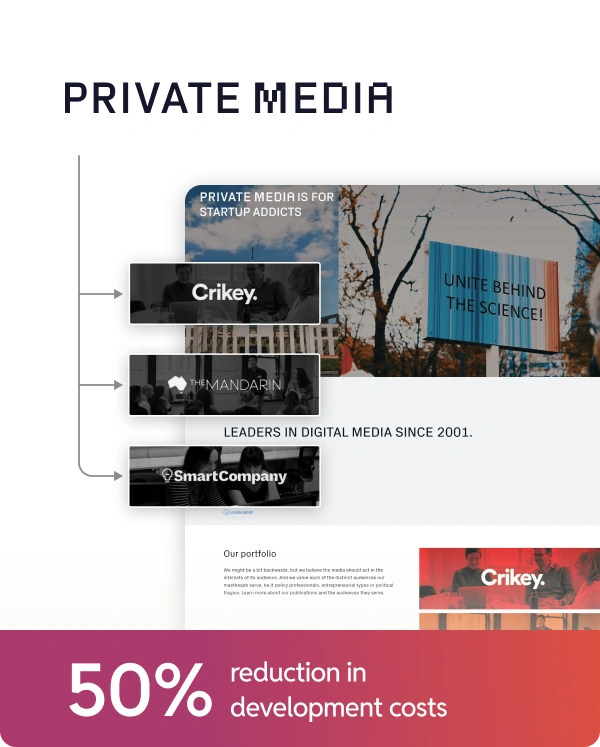
This standardized approach has allowed us to roughly halve our ongoing development costs and achieve higher code quality, all while making progress on our roadmap quicker than ever before.”

Kevin Cooper
Chief Growth Officer
50% lower development costs
With OnePress, Private Media reduced software development costs by half.
New brand onboarded
New brand was onboarded without starting over.
Why unify your brands?
The more sites you run separately, the more expensive that gets
Five ways a fragmented portfolio costs you more than it should.

Every new feature gets built multiple times
A new block type, an analytics integration, a design component gets rebuilt separately for each brand site. Roadmap cost compounds, not just maintenance.

No shared governance
Each site has its own dashboards, access models, and workflows. You update permissions site by site and there’s no single view of who can publish what, where.

Maintenance multiplies
Five brand sites means five maintenance windows, five test cycles, five places something can break. Each upgrade cycle is multiplied by the number of sites.

Design consistency is a manual effort
Every visual change has to be made on every site separately. A header update becomes a multi-site project.

Every new brand resets the clock
New acquisition? New architecture decisions and new project. The work you’ve done on your sites doesn’t carry over.
Dealing with one of these problems?
Sounds familiar?The two fixes most enterprises try… and why they both fall short
Both approaches create a hidden DXP tax, paid in either money or time. To fix fragmentation, you need a governed platform that every brand can operate within.

Standardize on a DXP
You pay seven figures for AEM or Sitecore and use a fraction of it. Upgrades feel like rebuilds. Consultants become permanent. The platform solves one version of the problem while creating a new one: cost and lock-in.

Fix it with process
Working groups and shared component libraries help coordination. But fragmentation is an architecture problem. Documentation and process can reduce the symptoms, they can’t fix the underlying architecture.
SolutionEngineered once. Governed centrally. Flexible for every brand.
Fragmented brand portfolios stay broken for a reason. Marketing can’t unify the infrastructure, whereas IT can’t fix the editorial bottleneck. OnePress is the rare platform where both sides win at the same time.

Owned by marketing
Marketing gets a platform they can operate without depending on developers. They can launch pages and new content across brands in one action.

Governed by IT
IT gets a governed network with centralized updates, one security baseline, and granular access controls across every site.

Engineered once
Engineering stops rebuilding the same thing five times. Features ship once. The platform carries them everywhere.

Aligned across stakeholders
We clarify the governance decisions, including what stays shared, what remains brand-controlled, and how teams work together across the platform.
AI readiness
Your brands are unified. And ready for AI
Without a unified platform, every AI capability gets wired in brand by brand, the same fragmentation problem you just solved. On OnePress, AI deploys once across every site on the network. Here’s what that unlocks across The 5 AI Dimensions:

AEO implementation
One schema architecture across your portfolio. Every brand structured to surface in AI search, configured once instead of five times.

AI-led editorial
One set of AI tools to power five editorial teams. Drafts, metadata, alt-text, and taxonomy are governed centrally, used per brand.

AI-led personalization
Per-brand personalization on infrastructure you own. Forget about a seven-figure DXP platforms.

WordPress as AI-integrated platform
Your AI stack lives at the network level while every brand inherits the same integrations. No separate implementation per site.

AI-accelerated development
AI speeds up how fast features reach your platform. Our quality control makes sure implementation is impeccable.
Learn more about rtCamp’s approach to AI on WordPress
What’s the difference?WordPress Multisite is the foundation. OnePress is the platform.
Native WordPress Multisite connects your sites through a shared installation. But it doesn’t give you is the enterprise layer your organization needs to run across brands. OnePress is that layer. It’s the productized result of 300+ enterprise implementations, open-source, and yours to own after implementation.
| What you need |  Native WordPress Multisite Native WordPress Multisite |  OnePress by rtCamp OnePress by rtCamp |
|---|---|---|
| Setup | Shared installation across sites | Governed architecture built for brand portfolios |
| Design system | Not included | Shared patterns, fonts, and components. Per-brand flexibility built in |
| Media management | Separate libraries per site | Centralized hub with one-click sync across every brand |
| Update management | Manual, site by site | Network-wide. One update cycle covers every site simultaneously |
| Access control | Basic user roles | Granular roles per site, all governed from one dashboard |
| Audit logging | Not included | Full network audit trail, including logins, content changes, security events |
| Brand flexibility | Limited without custom development | Standardizes 70–80% of infrastructure, preserves each brand’s identity |
| Implementation | Shared installation | We implement full multisite architecture, using OnePress, regardless of whether native WordPress multisite is required |
| What you own after | Shared installation | Full open-source codebase. Fork it, extend it, hand it to any team |
Our framework
6 components organized by who uses them
We test all updates before they go live, ensuring compatibility and preventing unexpected issues.

OneDesign
Configure shared fonts, colors, and components once. Each brand adapts within the framework without breaking it or requiring a developer.

OneMedia
Centralized brand assets with one-click sync across every site. Revision tracking ensures nothing goes out of date.

OneSearch
Cross-brand search, tunable per publication without developer involvement.
You own it. We engineer it
OnePress is open-source. The framework is yours to fork. What requires rtCamp is the architecture underneath: the governance model, the multisite configuration, and the engineering decisions that make it work at the scale you’re running.

OneAccess
Granular user roles per site, all managed from one dashboard. One access model governs who can do what, on which site.

OneUpdate
One dashboard, one update cycle. See what’s active across the network, what needs attention, and push updates simultaneously.

OneLogs
Full network audit trail: logins, content changes, security events. Central oversight without removing site-level editorial control.
You own it. We engineer it
OnePress is open-source. The framework is yours to fork. What requires rtCamp is the architecture underneath: the governance model, the multisite configuration, and the engineering decisions that make it work at the scale you’re running.

Ships once
Features built on the platform apply across every brand automatically. Built once, deployed everywhere.
You own it. We engineer it
OnePress is open-source. The framework is yours to fork. What requires rtCamp is the architecture underneath: the governance model, the multisite configuration, and the engineering decisions that make it work at the scale you’re running.
Why enterprises trust us

WordPress VIP Gold Partner

SOC II Type 2 Compliant

ISO 27001 Certified

Automattic Premier Partner

Pagely Certified Partner

Kinsta Elite Partner
Who OnePress is best forWhere multisite architecture delivers the strongest ROI
Not every enterprise needs multisite development. The biggest payoff shows up in these profiles.

Multi-brand conglomerates
Manage every brand from one governed platform, with shared infrastructure, centralized controls, and brand-level autonomy.
CASE IN POINT
When Cox Automotive unified 8 brands on one platform, up to 80% of design work became reusable.

House of Brands structures
Create consistency across brands through shared design systems and components, while preserving each brand’s distinct identity.

Media & publishing groups
Give each publication its own workflows and identity while managing everything from one platform. New acquisitions plug into the existing architecture without starting from scratch.
CASE IN POINT
Private Media unified 3 publications on one platform, reducing development costs by 50%. When it later acquired 4 more properties, they integrated into the same system without a new rebuild cycle.

Multilingual & multi-regional websites
Manage every region and language from one governed platform while giving local teams publishing independence.
CASE IN POINT
Videojet (Danaher) migrated 28 websites, 12,000+ pages, and 22 languages from Adobe CQ5 to WordPress, with zero marketing downtime and no ongoing licensing costs.

Franchise & multi-location networks
Manage every location from one governed platform. Head office controls shared branding, campaigns, and templates, while local teams manage location-specific content within defined permissions. Global updates roll out network-wide instantly.

Networks of internal websites
Manage intranets, department hubs, and regional portals from one governed network. IT maintains a single security and update baseline, while individual teams retain editorial control over their own sites.
How it works
What you can get done with rtCamp in 3+ months
We start with your two or three most complex brand sites. Once the pilot is proven, every brand after that gets easier.
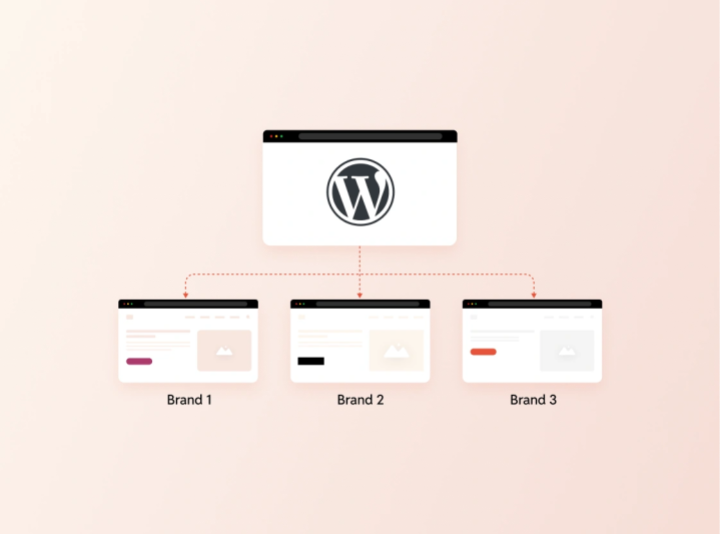

By the end of week two, you know what the platform will look like and which brands go first. By month one, your team has seen the platform work. The rest of the rollout is execution.

“rtCamp has helped our organization in so many ways. Their incredible wealth of knowledge and experience around the WordPress platform has brought peace-of-mind to our teams and leadership.”
Ready to run every brand from one platform?
Work with a WordPress multisite development agency that’s delivered 500+ enterprise projects. Let’s map your portfolio and build your case for consolidation. 20 hours of free discovery, no commitment required.
Related services
If you have a multisite brand, you might also be interested in these services.
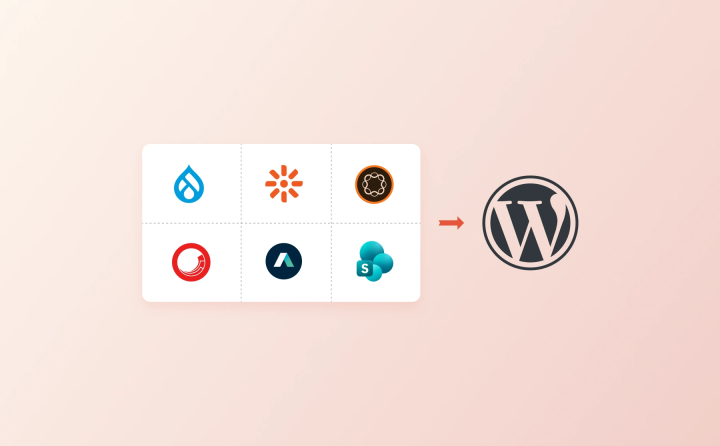
WordPress migration
Moving from AEM, Sitecore, Drupal, or a custom CMS? We migrate enterprise platforms to WordPress without losing content, SEO, or editorial workflows.
WordPress DXP
Want WordPress to function as a full digital experience platform connected to your CRM, DAM, analytics, and commerce stack? We architect composable WordPress you own and control.
WordPress modernization
Already on WordPress but stuck with an outdated codebase? We modernize legacy WordPress implementations, rebuilding editorial workflows and redesigning the user experience.
Check outour resources

Frequently asked questions
Multisite takes an afternoon. What we build to extend it to enterprise governance (shared design system, centralized media, network-wide access control, and update management) takes years of enterprise WordPress architecture to get right. OnePress is that work, productized.
OnePress standardizes the infrastructure, not the design. The 70–80% that’s standardized is the part your users never see: the codebase, update cycle, security baseline, and access model. The 20–30% that stays brand-controlled is everything they do see: fonts, colors, spacing, components, and the editorial experience. Brand identity stays distinct.
WordPress Multisite supports all three standard URL structures (subdirectories (example.com/fr/), subdomains (fr.example.com), or fully separate mapped domains (example.fr)). The architecture maps to your organizational structure: a central team pushing content to regional sites, or regional teams publishing independently within shared brand and security constraints.
Videojet (Danaher) ran 22 languages across 28 websites on this model. Zero marketing downtime during migration.
Every site in the network inherits the same security baseline: centrally managed patches, plugin vetting, and access controls. Individual site admins manage their own content without touching network-level configuration. rtCamp is SOC2 compliant and ISO 27001 certified.
Once the platform is built, onboarding a new brand typically takes weeks rather than months. The architecture decisions are already made, the design system is in place, and governance is defined. We start with a 20-hour free discovery to scope your specific portfolio before any timeline is set.
Before architecture is finalized, rtCamp works with brand teams to map governance: which elements are shared across brands, which stay brand-controlled, how editorial workflows differ. This work happens before the project starts and continues throughout.